Category: Nature & The Great Outdoors

  • Gimme Some of That Great White Hype

    Gimme Some of That Great White Hype

    snow storm

    Getting an inch of snow is like winning 10 cents in the lottery.

    -Bill Watterson


    As I type this, it’s relatively warm out and a light rain is falling, but a rumored “monster storm”— the worst of the winter, and we’ve had 16 so far— is moving in. Depending on who you listen to, by the time it’s all said and done we might have anywhere from one to 15 inches on snow on the ground. The totals keep being updated, but what’s not clear to me is whether a lower snowfall is a good or bad thing, less snow may well mean more freezing rain.

    I’ll admit, I’m hoping for a last hurrah. One more chance to build fun snowmen or snow sculptures, one more round of sledding down the hill.

    Earlier this winter, a weather page I follow on Facebook (or rather, followed; they’ve now disappeared) posted a picture of what one of the weather models was returning for the next week. They were very clear in saying that it’s nearly impossible to predict with any confidence a week out, and this was only what ONE model was saying, but if all the stars aligned and the timing and temperature worked out just right, we could be looking at measuring snowfall with yardsticks: 30-40 inches.

    I immediately shared the image with great gusto and glee, tagging all those people who seem to find every snowfall event a personal affront. I told the kids, and we envisioned building tunnels in the backyard for the dogs to move through and living the Little House on the Prairie life when our power inevitably went out.

    The model then went to take a much more conservative path, and in the end we got something like 6 inches of accumulation that time, I think. (It all runs together now.)

    And half the internet rolled their eyes and said, “I told you so,” and went on to slam everyone who had shared the photo, belittling their excitement. An article ran in my local paper called the “superstorm” the “great white hype,” and was very smug in its assessment of the original poster’s “irresponsibility” for sharing the weather model in the first place.

    Having now run through this scenario of snow Eeyore-ism 16 times this winter, I just want to go on record as saying: ye gods, get over yourself. I’ll take a little of that great white hype, every time. Here’s why.

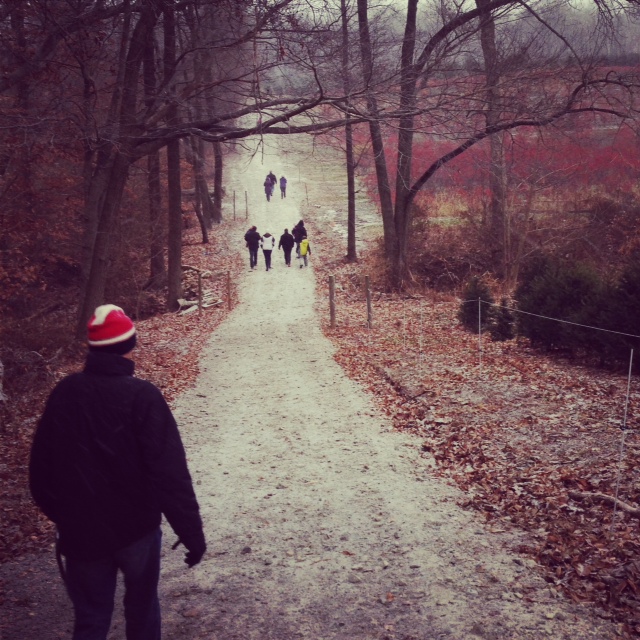
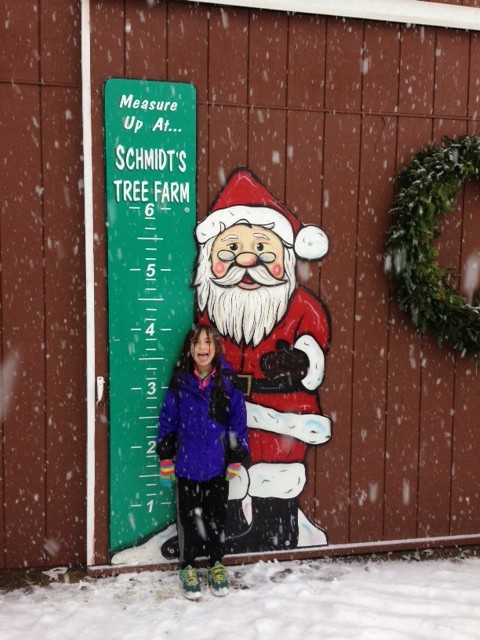
    In December, there was a snow event predicted to begin at noon, producing a coating to an inch. And so like responsible parents, we got the kids ready early and we went to get our Christmas tree at around 10:30.

    When we arrived, tiny flakes had started flurrying.
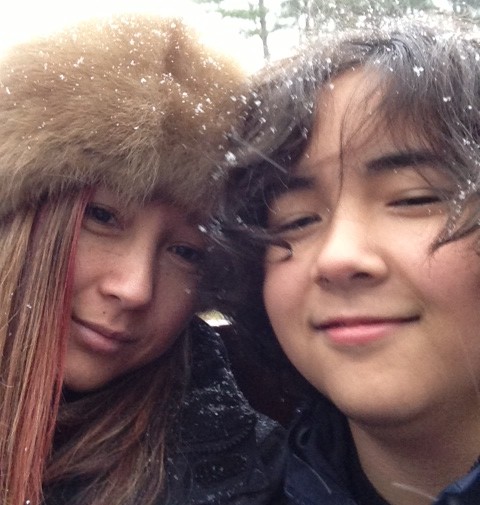
     

    me and Maverick

    tree farm


    By the time we’d found and harvested our tree 20 minutes later, it was really starting to come down in massively large flakes and the temperature was just plummeting. We tried to keep warm by a fire in a barrel while we waited for the tractor to return and transport us back to the parking area.

    Turns out, the tractor had got stuck and we had to walk back, slipping in fresh snow the whole way. There was probably already two inches of snow on the ground by that point.
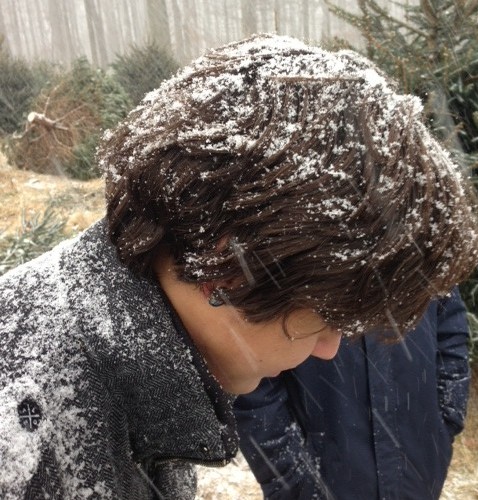
     

    snow in hair

    pick your own Christmas tree

    Schmidt's Tree Farm


    Our toes were numb, our hair was frozen, Jeff had icicles in his eyelashes.

    We paid for the tree, tied it onto the roof, and were on our way home. Only…

    We couldn’t get out of the parking lot. Stuck.

    So Jeff pulled back into our parking spot and we settled in to wait it out. After all, they’d only predicted an inch TOTAL. How much longer could it possibly snow?

    45min and many inches later, I was full on panicking. We were 3 miles from home. Jeff wanted to wait for a plow to go through, but we were on a rural road and clearly they had not been expecting this. How long would a plow take? How long would the gas in my tank keep us warm? All of our phones were on the brink of running out of juice and none of us had eaten.

    To make things worse, the kids hadn’t worn boots so their feet were already soaked. Cass wasn’t wearing socks or gloves. I did not relish the idea of having to piggyback her three miles.

    And, Jake’s girlfriend had come with us, sending the embarrassment factor soaring.

    I made the call: we had to start walking, before the storm got any worse (and it kept getting worse, near whiteout visibility at times). I told Rachel shoe should probably call her dad to pick her up, as the tree farm was closer to her house than our own house.

    Here’s where we got lucky: her dad drove an AWD that would fit all of us in it (Toyota 4Runner for the win). We made it home, passing all sorts of vehicles stuck in ditches and front yards. On one hill there was a long line of cars, and a team of good Samaritans pushing them up the incline one by one. It took Rachel and her dad over an hour to make it back to their house, usually 10 minutes away (I owe that man a beer).

    At home, it looked like this.
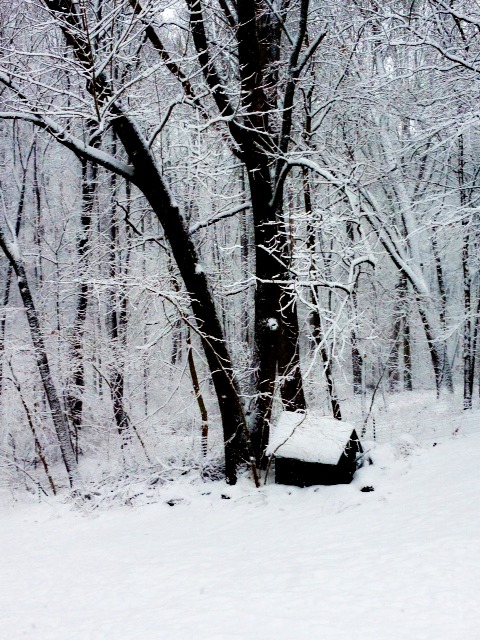
     

    snowstorm


    My point? You can’t tell me NOT ONE COMPUTER MODEL indicated there was a chance that we were going to be slammed by snow. If we’d had any idea that we might get hit by any real accumulation we’d have taken Jeff’s truck, not my minivan, and we’d have made sure the kids wore boots.

    I understand that there’s a risk of looking stupid if you predict sizable accumulations and it doesn’t happen. Around here we call that the Bolaris effect.

    But if there’s any chance at all, it’s irresponsible not to tell us about it. That’s how people get stuck on lonely rural roads with a car full of hungry kids.
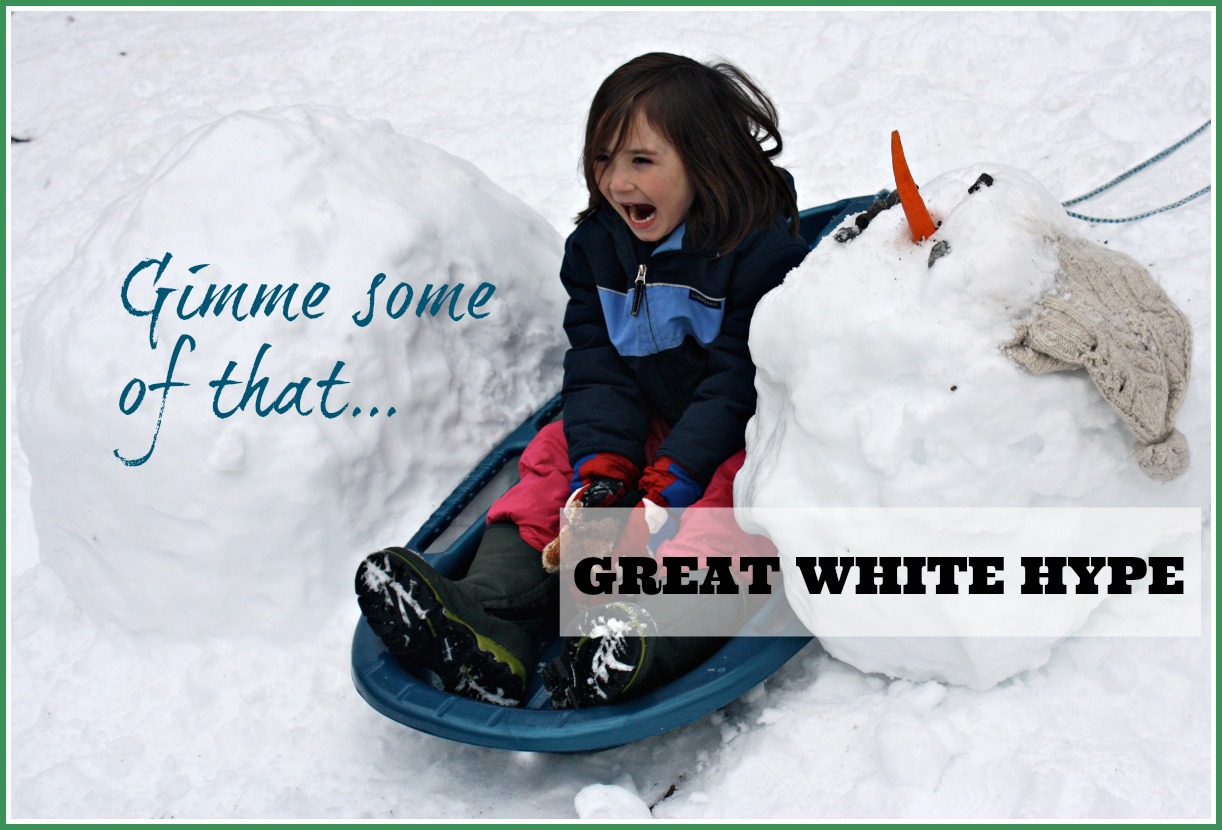
     

    Great White Hype


    Seriously, we are grown ass adults. We can handle it. We understand words like “just one model” and “very unlikely, but.” Time and again this winter it’s been illustrated that Mother Nature is sneaky and valuable insight into her caprices is being deliberately withheld from us, in the name of ratings and saving face.

    We are grateful for two hour delays. Sure, the road outside your window might be fine. On our twisty roads they are often treacherous and a bit of sun makes a huge difference; I’d prefer my boys not have to walk an icy road around a blind curve at 6:30am in the dark. The schools make the call with ALL their kids’ safety in mind… not just your personal convenience.

    We reserve the right to purchase bread, milk and eggs, the staples that households with kids run through in just a day or two. A small amount of snow often turns into days of melting and refreezing ice; one snowfall can easily trap me for days on end.

    We also have the right to indulge in gleeful childlike anticipation of the impending storm, even when we know it probably won’t pan out. 90% of the joy of snow is waiting for those flakes to fall.

    I’ll take reveling in the deliciousness of a predicted 40″ that never came to be over shoveling an unexpected foot of snow any day.
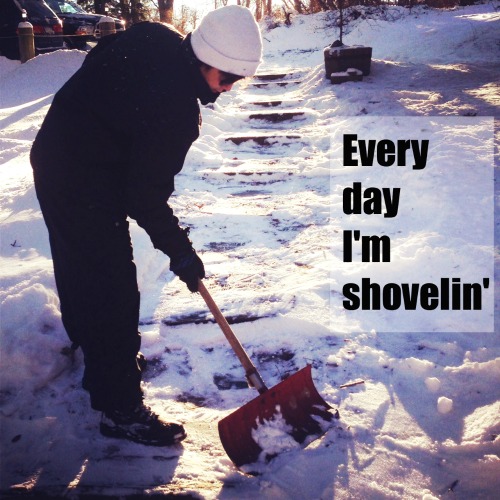
     

    shoveling


    So, internet, you can take your snow smugness and shovel it.

    This storm may well be a bust— it feels pretty warm to me out there right now— but I’m glad our school district has already decided not to chance potentially icy roads during the morning rush, calling with a 2hr delay.

    It was nice thinking about going out with a bang. It will be even nicer not having to deal with it.

    Don’t ruin it by being a jerk. I get it, when you predict a storm won’t be as severe as forecasted, you’ll be right half the time.

    Big deal. Let it go.
     

  • 7 Easy Ways to Protect Bird Populations

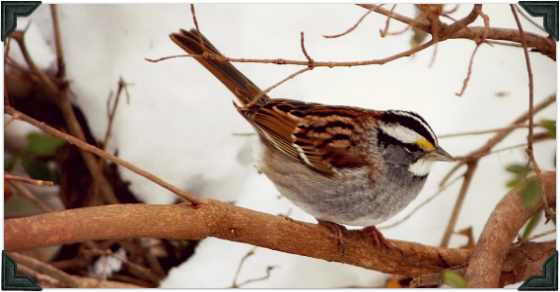
    white throated sparrow

    “Pan, who and what art thou?” he cried huskily.

    “I’m youth, I’m joy,” Peter answered at a venture,
    “I’m a little bird that has broken out of the egg.”

    ―J.M. Barrie, Peter Pan

    We love our birds here, and even those who were reluctant at first were won over by their cheerful, bullying ways. We’ve been careful to make sure we set out seed and suet during the many, many, many days of ridiculous weather and unusual cold this winter has thrown at us (and when I say we, I mostly mean Jeff, who is better at remembering things than I am these days).

    While setting out seed is helpful for our feathered friends, who are warm blooded and need the nutrients to keep warm during a time of year where their usual sources of food are not readily available, there are lots of other ways to offer a helping hand all year round.


    house wren in snow

    7 Easy Ways to Protect Bird Populations


    Keep Birds Safe from Cats

    A 2013 study estimated cats kill 1.3 to 4.0 billion birds every year, making them likely to be the biggest threat to bird mortality. Most of those are probably due to stray and feral felines, not well-fed housecats, but I know at least one of my cats has found the occasional bird an irresistible temptation.

    • Keep your cats indoors as much as possible. If you have a cat that just is miserable unless it can free-range a bit, a bell on a sparkly collar can help alert birds to his presence.
    • Situate feeders and birdhouses in places a cat can’t get to. Height isn’t quite enough; baby birds will be on the ground beneath while fledging so keep that in mind.
    • Make sure birdhouse tops are secure. Cats can climb better than you think and the last thing you want to see is it scooping its paw into the top of your birdhouse, helping herself to the baby bird feast inside. (Don’t ask how I know.)
    • Take strays to a no-kill shelter rather than just giving food. Donate to no-kill shelters so they can continue to house cats waiting adoption and offer low-cost neutering. And it goes without saying, spay and neuter your own cats.


    Birdproof your windows

    Window collisions are probably the second most dangerous threat to birds, killing 365-988 million in the US each year. Low-rise buildings (56%) and residences (44%) are much more of a problem than skyscrapers (only 1%). This one is a pretty easy fix:

    • Don’t put feeders directly outside a window.
    • If you have sliding glass doors or windows that you know are collision threats, invest in some specially-made window decals. They are fairly unobtrusive to our view, but when placed on the outside noticeable reflect UV light.
    • Or, a DIY tape pattern will work too, according to the American Bird Association. “Most birds will avoid windows with vertical stripes spaced four inches apart, or horizontal stripes spaced two inches apart.”


    Provide shelter

    Trees are bare in winter, so they’re not doing much to keep birds warm through long nights with bonechilling winds. So while shelter is definitely a year-round concern for birds, it’s especially nice to aid them during the cold months.

    • Leave a brush pile of fallen branches. An easy way to start a brush pile is to just hang onto your Christmas tree; bonus points if you hang some suet and birdseed “ornaments” on.
    • Hang birdhouses in areas that are shielded from high winds.
    • Clean out birdhouses at the end of nesting season. This will help new bird tenants stay healthy, and make it easier for them to move in.
    • Grow shrubs and other nest-friendly foliage.


    Don’t use pesticides

    Pesticides poison insects. Birds eat insects. Whether they’re affected directly (by being poisoned by the chemical itself) or indirectly (by ingesting poisoned insects, or by a depleted insect food supply), common sense suggests pesticides are not bird-friendly.

    • This one seems like a no-brainer to me. Skip the pesticides. Encourage more birds (and bats) in your area for natural pest control.


    Go native

    Cultivating plants native to your area means less maintenance for you, as they are already acclimated to your weather, soil, etc. It also means encouraging insects your neighborhood birds and wildlife have evolved to eat. By contrast, exotic plantings need lots of care and cultivate the foreign insects that traveled with them. This is how we get explosive, damaging insect populations like the stinkbug: they have no local natural predators.


    Yes, food and water

    As the world around us becomes increasingly more urban, birds have to fly farther to find the food and water they need to stay alive. It’s easy to create a habitat that can become a bird’s oasis. Just keep in mind that if you start, they will come to depend on you as a reliable source; don’t let them down.

    • Water can be hard to come by during times of freezing cold and times of draught. Do your best to keep bird baths clean and unfrozen. I highly suggest something like this Water Wiggler in bird baths; they keep the water moving and the mosquito population down.
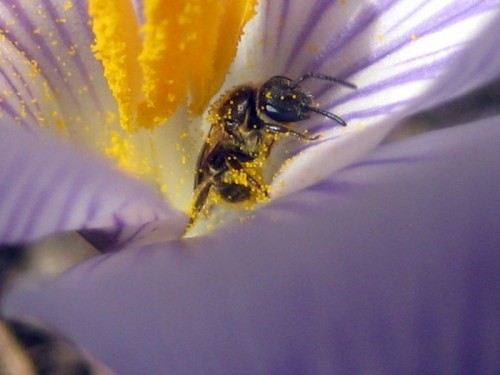
    • Offer food in a variety of ways. Some birds like hanging feeders; some like to feed from the ground. Some forage for insects in dead wood and in leaf piles. Some love flowers and their seeds.
    • You get what you pay for in feeder seed. Cheaper bags of seed have lots of filler that will be wasted as birds root through it looking for the good stuff. We mostly stick with suet and black sunflower seed, which seems to be a crowd pleaser, and additional specialty feeders for the hummingbirds in the spring and summer.


    Educate.

    You care for what you know. It’s easy to let the sounds and creatures of nature fade into the background of our noisy, busy lives.

    • Take the time to point out different species of birds, their calls and identifiers, to those who don’t know them— especially kids. There’s lots of birds. It takes a discerning eye to realize there are fewer jays than we had as kids, an ear that is accustomed to the every day chatter of neighborhood birds to notice when something extraordinary has come to call.
    • Share these tips with neighbors and encourage them to create welcoming spaces for birds in their own backyards, so we can weave a tapestry of safe havens within our cities.


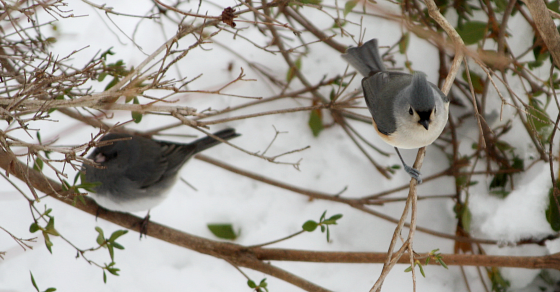
    titmouse and junco


    It’s a little bit of hassle that is totally worth it, to know you’re able to share in bird survival and bring them closer to your own world.

    What would life be like without birds? Not waking to crows cawing? Without seeing a flash of color dart from treetops? I don’t want to find out. Do you?

    What did I miss? Any other ways you support your local birds?


    *Disclosure: Product links are Amazon affiliate links, which means if you click through and make a purchase I will receive a small affiliate fee.*


  • Bee the Change: 10 Ways to Protect Bees and Other Pollinators

    Bee the Change: 10 Ways to Protect Bees and Other Pollinators


    bee

    The keeping of bees is like the direction of sunbeams.
    ― Henry David Thoreau

    Last Sunday in Oregon some 25,000 bees were found dead in a Target parking lot, an unsettling headline to read on the first day of National Pollinator Week. The jury is still out on the cause, but it looks like an improperly applied pesticide (not intended for trees while in bloom) might be to blame.

    It’s being called one of the largest documented bumble bee deaths in the US, but bee die-offs have been happening with disturbing frequency over the last few years: annually we lose 30% of our bees. These die-offs are referred to as “colony collapse disorder,” and like this latest bee death episode the reasons are unclear. I’ve heard climate change is to blame, or over citification/under naturalization (I made those terms up but you know what I mean), or cell phone interference, or (most likely) the overuse of pesticides.

    Bees and other pollinators are important, and it’s important that we sit up and take notice and care— and do what we can to help. To lose any prominent member in the food chain is inviting ecosystem chaos, but losing pollinators means severely impacting food security.


    share the buzz


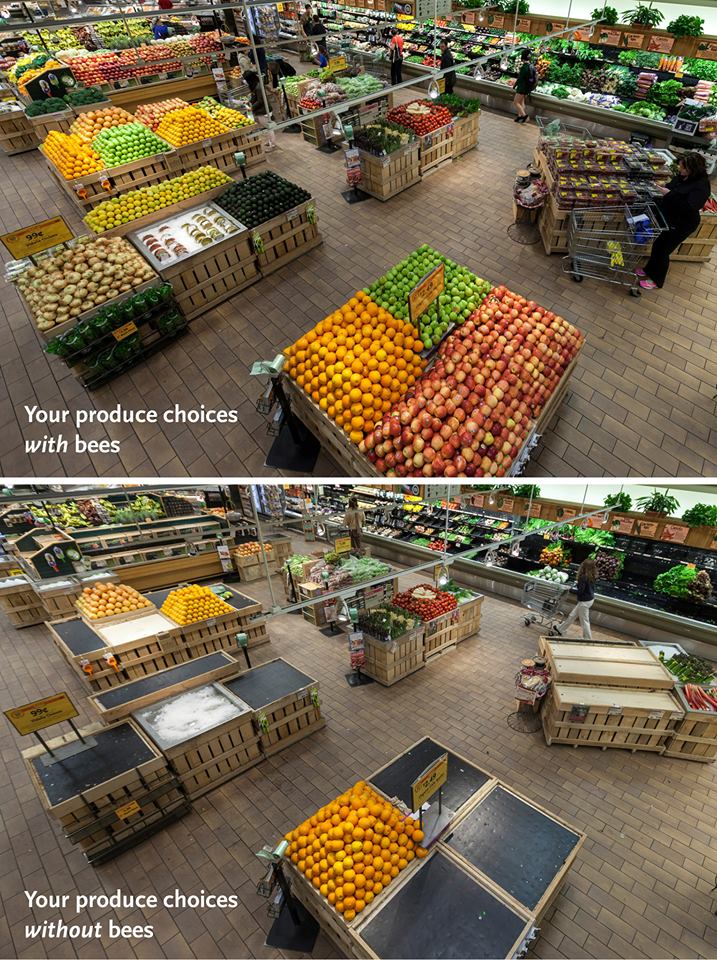
    This Whole Foods photo represents what our homegrown food supply looks like without the aid of bees, who pollinate more than 100 of our crops.

    So what can we do to help bees and pollinators?

    1. Don’t use pesticides. They impact bees and other pollinators, and I’m not convinced long-term exposure is great for every other kind of animal, either. Also, keep in mind that some insects may be considered pests in their larval stage but go on to become pollinators, or are important food sources for more loved birds and other wildlife.
    2. Buy organic. The more traction the organic movement achieves, the more it can expand and the more accessible it can become. Supply and demand, friends.
    3. Grow your own. Plant bee friendly flowers and encourage your neighbors to do the same. Think of it as a natural patchwork quilt or a bee railroad, offering sustenance through “food deserts” created by large expanses of asphalt and concrete.
    4. Go native. Stick with wildflowers that occur naturally in your region. They’re easier to grow, more hardy and have evolved to be more resistant to local pests (thus reducing the need for pest control). They’re also evolved to provide the best for your local bees.
    5. Buy local. Seek out local honey and support your local beekeepers.
    6. Educate yourself. This Citizen Scientist Pollinator Monitoring Guide is a pretty comprehensive source of bee info.
    7. Be citizen scientists. In the US, participate and add data to The Great Sunflower Project. In the UK they’ve streamlined the process with a smartphone app that makes it easy to contribute photos and data.
    8. Educate others. The fallout of bee decline affects us all, starting with higher produce prices and ending with something much worse. Spread the word. I like the Whole Foods Share the Buzz page as a place to start.
    9. Donate. The Xerces Society works with researchers and citizen monitors to collect bee data to help shed light on the problem, with legislators to preserve pollinator-friendly habitat, and with farmers and landowners to rebuild bee supporting landscapes.
    10. Sign your name. A class of pesticides called “neonics” has been listed as a possible cause of colony collapse disorder. European officials have enacted a 2 year ban on the use of these pesticides and this petition asks the U.S. Environmental Protection Agency (EPA) to do the same. Give it and others like it a sign. It only takes a second.