Blog

  • DIY Slip N Slide

    DIY Slip N Slide

    laughter

    The most wasted of all days is one without laughter.
    ― E.E. Cummings

    Cassidy has never wasted a day in her life.

    Yesterday for the 4th we did all the usual patriotic things: we had burgers and shakes, we watched fireworks, we played in the water.

    Not at the pool though; not this year, even though it has been hotter than it has any right to be for weeks now.

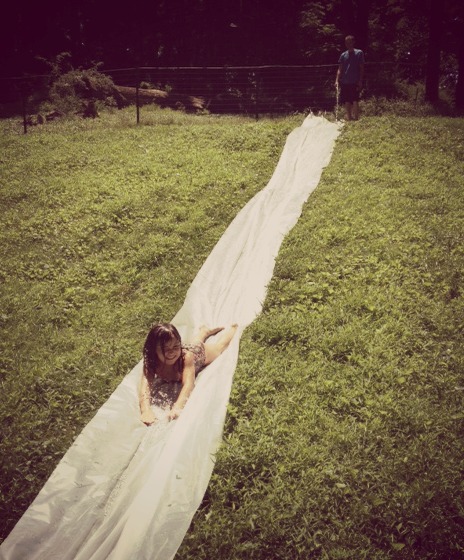
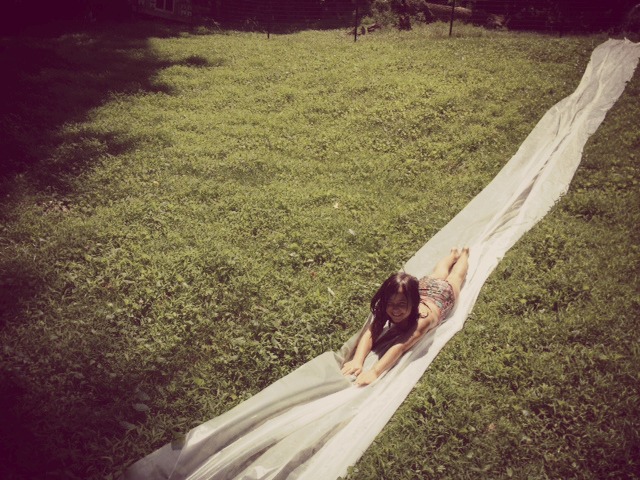
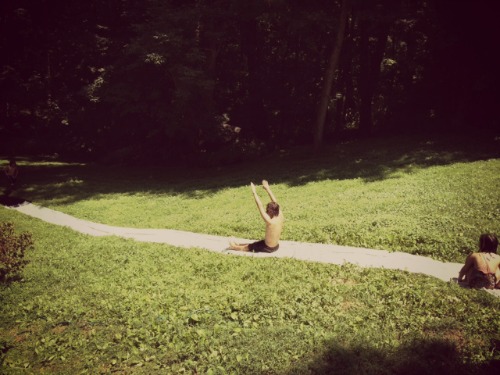
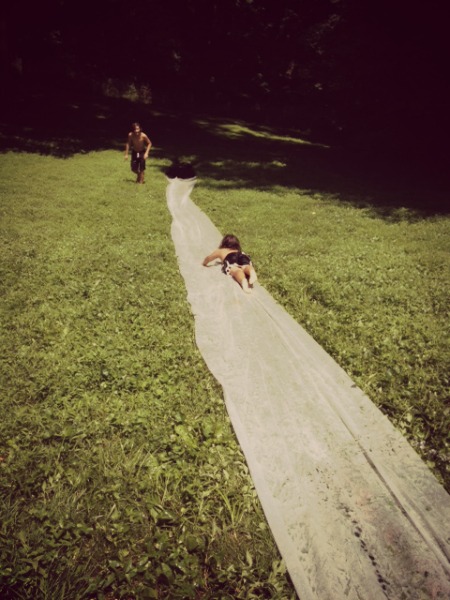
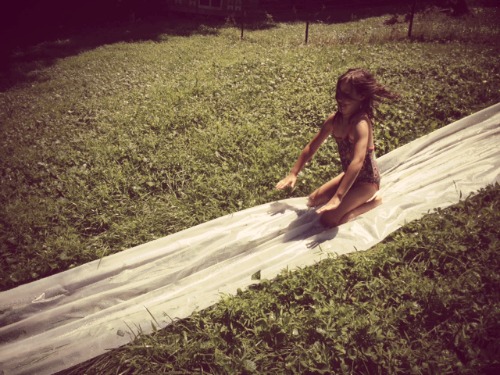
    This year Jeff masterminded the DIY Slip N Slide, which I dubbed the redneck waterpark.

    Apologies for the crappiness of the photos. It was high noon and sunshiney.


    make your own slip and slide


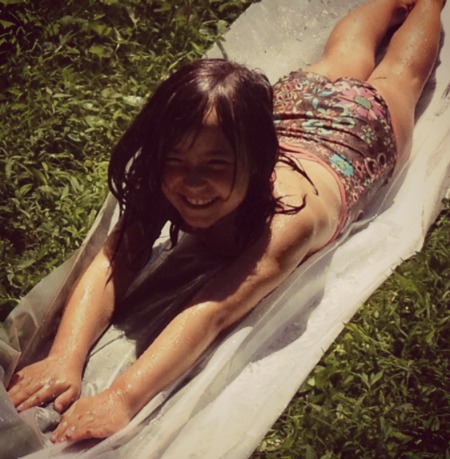
    Cassidy decreed it “the coolest thing ever.” Every time she went down it, which was approximately eleventy billion times.

    I just can’t help but be amazed by a kid who, when presented with a sheet of plastic on the side of a steep hill, says (in so many words), “Hellz yeah! Lemme get my bathing suit on so I can careen down that sucker headfirst!”


    slip and slide diy


    You know what I mean? Fearless. It takes my breath away.

    The boys had a few goes too, but not with the same abandon.


    slip and slide


    slip n slide make your own


    Anyway, all you need to make your own redneck waterpark:

    • one hill, the steeper the better (preferably not too rocky, it’s hard on the nips)
    • one sheet of plastic; ours was 60 ft
    • one hose; can be turned on just when someone is about to go down the slide, so it’s not terribly wasteful (especially compared to a pool or sprinkler)
    • at least one kid with the imagination to see the possibility, who’s willing to take the plunge.


    Enjoy 🙂


    backyard slip n slide

  • ‘Don’t teach your children to love the wilderness?’ BULL PUCKEY.

    ‘Don’t teach your children to love the wilderness?’ BULL PUCKEY.

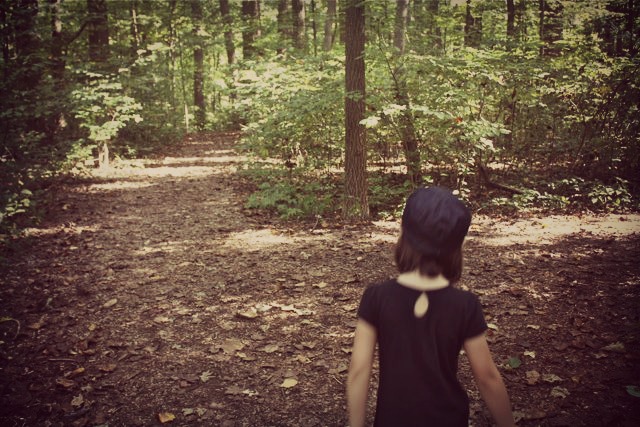
    woods

    BULL PUCKEY, I say.

    I ran across this commentary on Jorgen Randers’ ‘2052: a global forecast for the next forty years,’ slated for publication in July, and was so flabbergasted by what I read in there that I’ve had the post open in my browser for days until I had time to write about it:

    There is a section called “What Should You Do?” which is usually the part in such books that picks you up a bit, and makes you believe that you can do something…

    [One] is “don’t teach your children to love the wilderness”. Randers reasons that over the next 50 years we will see the ongoing erosion of biodiversity and wilderness, due to climate change and humanity’s reach into more and more remote areas. A love for “old, undisturbed nature”, he argues, is something it will become increasingly difficult to satisfy. ”By teaching your child to love the loneliness of the untouched wilderness, you are teaching her to love what will be increasingly hard to find”, he argues, which will lead to unhappiness and despondency. ”Much better then”, he concludes, “to rear a new generation that find peace, calm and satisfaction in the bustling life of the megacity – and with never-ending music piped into their ears”.

    What fresh hell is this?

    (And no, I don’t mean the decidedly British punctuation issues.)

    I know that it’s reported that the average American kid spends 4-7 minutes daily outdoors in unstructured play (just outdoors, not specifically in a “wild space”) and a hurts-my-heart-to-hear seven HOURS parked in front of a screen. It’s mind-blowing and seemingly insurmountable, but there are tons of initiatives trying to reverse that trend, from the National Wildlife Federation’s Green Hour to KaBOOM’s Playground Challenge to Michelle Obama’s Let’s Move campaign to Screen Free Week and so on.

    Sure, we could just teach our kids to learn to just love their bodies, no matter how rotund and unhealthy they become, but we are not resigned. Right? We continue to fight that battle because we f*cking care about our children and their health and even if the tide is incredibly hard to turn, we have to try. If only to keep reminding everyone that we could be healthier, we can eat better and move more and spend more time outdoors, and we bloody well should.

    We continue to teach our kids to value things that have value.

    The idea of not teaching our kids to love and value the wilderness because one day it might not be there is like saying we shouldn’t teach our kids to love us— because one day we will be gone.

    We also teach them how to live without us. We teach them in the hopes that they will carry us in their heart and their minds and in their words and their actions. And in the same way, it’s practical to teach them how to live in cities, how to navigate and find beauty there; but we should strive also to teach them to love wilderness and open space and green life, in the hopes that they will seek it and nurture it and preserve it. Because it has value.

    Children will only try to preserve what they love, that’s human nature. And they will only learn to love wild spaces, solitude, freedom if we give them time to enjoy it; and by showing by example. Which is to say:

    GET OUT THERE.

    National Park attendance by young people is down. The more attendance declines, the more likely it is that these natural spaces will lose their government funding and protection. And once they’re gone… they’re gone.

    But you don’t have to travel to a national park. There are plenty of pockets of untended nature all over the country, and they need protection. These are safe havens for wildlife, travel corridors. They are escapes for the human animal, a place to reconnect  to the wildness and the peace within. A place for you to share with your kids. To create memories. To develop a stronger sense of self. To be healthier. To foster a love of nature.

    For the record, there are some other things increasingly hard to find that I’ve also taught my kids to value:

    • personal responsibility
    • respect for their elders
    • regular household chores that are actually useful (cooking, cleaning, laundry)
    • proper grammar
    • being well-read
    • holding doors open for people behind them; running ahead to open doors for those who might have trouble
    • manners in general

    Because they have value. That’s reason enough.

    What say you?
     

  • Ranger Rick educational nature apps for iPhone and iPad, 99 cents

    Ranger Rick educational nature apps for iPhone and iPad, 99 cents

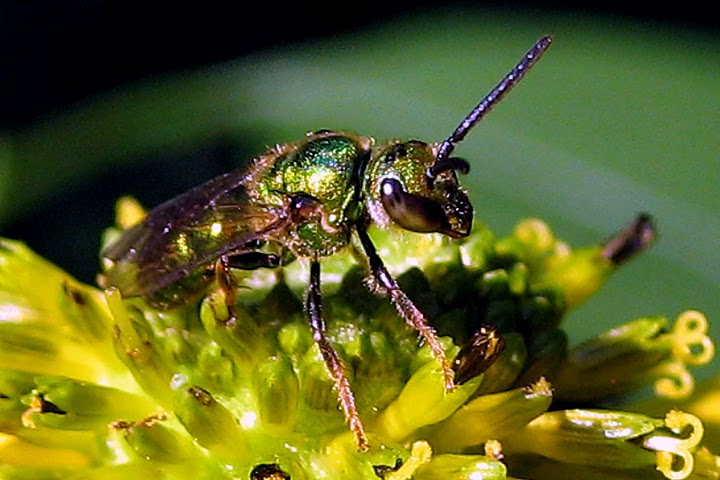
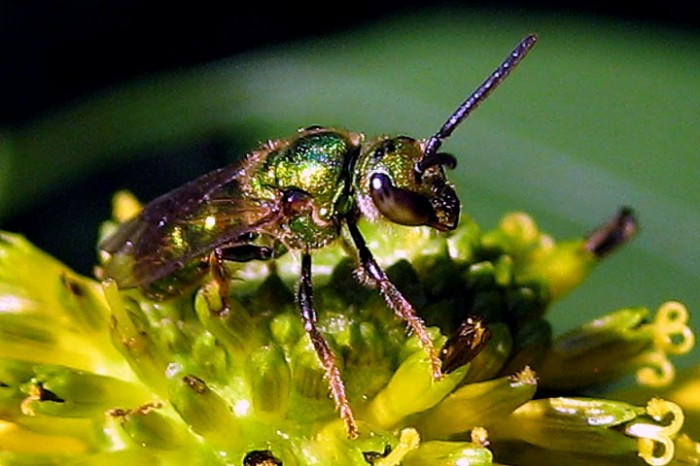
    green bee

    Study nature, love nature, stay close to nature.
    It will never fail you.

    -Frank Lloyd Wright

    I got Ranger Rick magazine for years and years and years.

    I’m going to go ahead and credit it for my ongoing love affair with nature photography, especially frogs (for no real reason I can think of, I just associate frog images with Ranger Rick) and macro.

    The National Wildlife Federation now publishes three different magazines for a wider range of kid ages:

    • Wild Animal Baby for toddlers is board board sized with nice solid pages to hold up to some serious love; 
    • Big Backyard is basically the same as Ranger Rick but with games and vocabulary scaled to the pre-K and kindergarten crowd;
    • and of course, Ranger Rick itself, for kids ages 7-12.

    (Where does a kid turn for his nature photography fix after age 12? National Geographic, I guess.)

    If you have a NOOK, you can get e-subscriptions to save paper, but then how do you cut out pages for projects and wall decor? Just seems silly to me.

    Anyway, the National Wildlife Federation also has some cute new wildlife apps for kids available for iPhone or iPad, another avenue to get your kids excited about learning about the great outdoors and its inhabitants. Right now they’re just 99 cents!


    what did snakey eatWhat Did Snakey Eat?
    In this delightfully silly game, preschoolers develop thinking skills by matching 
the shape in Snakey’s belly to one of the three suggested objects. Did Snakey swallow an umbrella? A rhinoceros? Or even a school bus? The giggles never stop when preschoolers see the crazy things that Snakey has eaten. Choose the correct object 
and Snakey will spit it back out, then swallow something even funnier!


    click the birdieClick the Birdie
    Score points, discover cool bird facts, and have tons of fun in Ranger Rick’s adventure-packed app. Use Rick’s special digital camera to photograph some truly awesome birds as you travel to wild places throughout the United States. Visit a Cypress Swamp, an Arizona desert, the Hawaiian Islands, and other fun locales. At each stop, you’ll meet three different birds to photograph. If you frame all three just right, your photos will appear in Ranger Rick’s bird gallery.

    But look out! These birdies are quick, and you’ll need fast fingers and sharp eyes to catch them before they fly away. Keep clicking and soon you’ll be a pro at this intriguing game, which also teaches kids about wildlife and fosters a love of nature and exploration.


    ranger rick appRaiders of the Lost Aardvark
    Join Ranger Rick the raccoon on a wild ride through Africa in this thrilling detective game that tests your sleuthing skills. A rare mummified aardvark has been unearthed in sub-Saharan Africa, rocking the archaeological world. The archaeologist who discovered it, Jack Snare, believes that the aardvark holds the key to unlocking some of the world’s greatest natural mysteries.

    Snare takes his aardvark mummy on a global tour of prestigious museums. But en route to the Natural Science Museum in Africa, his precious cargo is stolen! And strangely, after the theft of the aardvark, some of Africa’s rarest and most endangered animals begin to disappear as well.

    Is the aardvark cursed? Was it never meant to be found? Is there something sinister behind the disappearances? Put on your detective cap and help Ranger Rick track down the clues to solve this mummy mystery!


    Know of any other wildlife & nature apps suitable for kids?