You may have seen the stories circulating— folks are complaining that Honest sunscreen doesn’t work. They’re upset because they selected Honest (Jessica Alba’s company) as a non-toxic alternative they trusted to keep their own and their children’s skin safe.
It appears that the issues started once Honest reformulated their SPF 30 sunscreen lotion “for 80-minute water resistance and an improved formulation that allows for easier application and a lighter-weight feel.” To that end, they added shea butter and plant based oils while cutting the amount of zinc oxide in the tubes from 20 percent to 9.3 percent (Honest points to the fact that they “received the best score possible from the Environmental Working Group (EWG)” but their profile on that list includes the 20% zinc oxide, suggesting the determination was based on the earlier formula).
Honest has pulled the product from its site, but poking around I saw listings that touted “non whitening” as a selling point.
The FDA requires companies to test their own products, but doesn’t verify the results of those tests. Companies are also not required to share those test results with the public. And, manufacturers aren’t required to test their sunscreens on human skin. I couldn’t find it stated explicitly anywhere on their site but I think it’s safe to assume Honest is cruelty free, so they most likely relied on labs testing their sunscreen’s rates of absorption or “scattering” of UV rays.
OK, so there’s a lot to talk about here. Let’s dive in.
Why Honest uses zinc oxide (and you should too)
“Chemical” sunscreens— misleading, by the way; even water is a chemical, but that’s a topic for another day— are meant to applied some time before you are exposed to the sun. The reason for this is that the sunscreen is formulated to soak into your skin to absorb UV radiation, and contains some questionable ingredients that have been linked to hormone disruption (oxybenzone) and cancer (retinyl palmitate).
The oxybenzone that washes off skin in the ocean has also been implicated in the die-off of coral reefs: an estimated 4,000 to 6,000 metric tons of sunscreen washes off swimmers’ bodies annually.
Zinc oxide, on the other hand, sits on top of your skin as a physical barrier, scattering UV rays to protect the skin beneath. There is minimal absorption and so radically reduces the odds of toxic impact to your body. (Badger Balm does a great job explaining zinc oxide 101 here.) Zinc oxide has not been shown to cause harm to the corals.
Takeaway: I’m not going to point and scream TOXIC! or CANCER! but I’m not comfortable with the questionable ingredients in “chemical” sunscreens, since sunscreen is meant to be used liberally and whenever you’re going to be in the sun. I have concerns about how those ingredients interact with others I already carry as part of my “toxic burden.” And I really have concerns about how the coral reefs are being affected.

Zinc Oxide is white. Deal with it.
My main issue with this whole story is that— allegedly, as I’m relying on articles about it— Honest reformulated their sunscreen in response to customer complaints about the look and feel of the product, not effectiveness.
They could have, should have posted a sensible statement like “Honest uses zinc oxide because it provides broad spectrum coverage by deflecting UV radiation from the top of your skin, rather than absorbing into it. To be truly effective, zinc oxide needs to be used at a concentration that causes a whiteness that won’t necessarily fade when rubbed in, and requires suspension in a relatively thick carrier. We at Honest care about the effectiveness of our product and the safety of your skin.”
Instead, they decided to cut efficacy and cater to the vanity and hyper-sensitivity I imagine they saw as characteristic of their demographic. At least, that’s the way it feels to me. “But our customers deserve to look and feel fabulous at all times, especially while soaking up the sun!”
(Here’s a thought: why didn’t they just tint the sunscreen?)
Takeaway: in order for zinc oxide to work effectively it will be at least a little white and at least a little thick. You want your sunscreen to be effective. Aesthetics are not a primary concern here. Safety>sexy.

The blame may not all be with the sunscreen, though
Since the zinc oxide amount was cut in the new lotion, it follows that you’d need to lay that nonsense on thick to get adequate coverage. I’m guessing that didn’t happen, although in all fairness if you’d previously purchased Honest SPF sunscreen you wouldn’t expect different results.
Also, since other ingredients were added, you’d need to shake/knead the container to spread the zinc out somewhat evenly. Zinc oxide is a mineral, a physical thing, and it can settle. So maybe what happened to at least some of those who got burned is that they hit a section with less zinc.
Takeaway: don’t get burned by user error. Shake or knead the container before applying to distribute the zinc oxide in sunscreen before applying, and lay it on thick.

Honestly, you’re probably not using enough sunscreen
I’ve been sunburned only twice in my life. I’m fairly dark skinned, but that’s not the reason. I loathe getting tanned because it happens to me so quickly; I get new tan lines while just waiting in line at the farmers’ market or driving to pick up the kids from a friend’s house and it looks ridiculous. I avoid the sun like the plague during the peak hours of 10am through 2pm. If I’m spending any real time outdoors I wear sunscreen, especially on my face.
Both times that I burned were at the beach. The first time was early morning, like 6-9am, when I fell asleep on the sand. The second (just a few weeks ago) was when I used a sunscreen I’d been given that wasn’t waterproof; I stayed on the beach longer than I’d expected after hitting the waves and never reapplied.
You’re supposed to use one ounce, or a shotglass full of sunscreen every time you apply. Rule of thumb is to apply every two hours when you’re staying out in the sun. Yes, it’s expensive. Yes, cancer is more expensive. Your risk for melanoma doubles if you’ve had five or more sunburns over your lifetime.
Takeaway: read the bottle and follow the directions. Not all sunscreens are waterproof. If the zinc oxide concentration is low you need to apply even more than the standard shotglass full. Reapply before you start to burn.

Final takeaways
If I’m being honest I never much cared for Jessica Alba and so I’ve never tried any of her company’s products. But this whole situation serves as a reminder to take a good look at ingredients and claims, even from “natural” and “non toxic” companies. An ingredient occurring in nature does not mean it is safe or effective, and not all ingredients or claims are regulated by the FDA. Do your research.
That said, the company appears to be taking a legitimate and personal approach to rectifying the situation. If you had a bad experience they list a phone number you can call here.
By the way. I don’t champion the need for sunscreen 100% of the time; I think we need some exposure to reap the health benefits of sunshine. But anytime you’re going to be out between 10am and 2pm: yes. Anytime you’ll be out in direct sun for more than 30 minutes: yes. On your arms when going for a long drive: yes.
But if all that’s available when you’re at the pool or beach is a “chemical” sunscreen, then go ahead and use it. We’re talking about possible bad outcomes from these products, and it’s sensible to not gravitate towards them. But we know skin cancer is linked to excess sun. Any sunscreen is better than none for prolonged or direct exposure.
And dammit, there’s no such thing as a “base burn” or “base tan.” Tan means skin damage, period.
OK, recap time.
8 No Nonsense Rules for Sun Safety
- Don’t burn. 5 sunburns over a lifetime double your risk of melanoma.
- Even if you have dark skin you need sunscreen.
- Read sunscreen directions and follow them.
- Zinc oxide is the preferred active ingredient and the concentration should be somewhere around 20%.
- Shake or knead container to distribute active ingredients before applying.
- Apply liberally and often; efficacy is more important than vanity.
- Be especially vigilant between 10am and 2pm but you can still burn at other times.
- Any sunscreen is better than none.
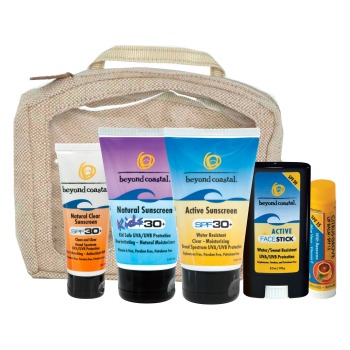
This is EWG’s list of the best sunscreens for sports and the beach, based on their standards for efficacy and ingredient safety. From that list I can personally vouch for Badger, Beyond Coastal, Belli, California Baby, COOLA, Green Goddess and Juice Beauty (links go to reviews).
Did you get burned by Honest sunscreen?
What non toxic sunscreens can you vouch for?