A truly good book teaches me better than to read it.
I must soon lay it down, and commence living on its hint.
What I began by reading, I must finish by acting.
-Henry David Thoreau
Kim from my From Left to Write book club asked what’s on everyone’s reading list, so I clicked over to my Amazon wishlist… (Please note, affiliate links.)
Green, Nature, Eco books

 The Nature Principle: Human Restoration & the End of Nature-Deficit Disorder by Richard Louv. “In this sanguine, wide-ranging study of how humans can thrive through the “renaturing of everyday life,” Louv takes nature deficit disorder, introduced in his seminal Last Child in the Woods, a step further, to argue that adults need nature, too. “A reconnection to the natural world is fundamental to human health,” he writes, asking, “What would our lives be like if our days and nights were as immersed in nature as they are in electronics?”

 The Journal of Henry David Thoreau 1837-1861. “Thoreau began keeping a journal at age 20, ultimately filling 14 notebooks & a collection he titled “Gleanings; or, What Time Has Not Reaped of My Journal.” …Searls selected passages from this vast sea of words to create the largest & most cohesive one-volume reader’s edition ever published. Thoreau’s journal was the wellspring for all his books, & Searls is acutely attuned to its grand continuity and “synthesizing quality,” ensuring that readers will be able to fully appreciate Thoreau’s sustained contemplation of the cycles, patterns, & interconnectivity of nature.”

 Seeds: One Man’s Serendipitous Journey to Find the Trees That Inspired Famous American Writers from Faulkner to Kerouac, Welty to Wharton by Richard Horan. “From the wooded road made of golden hemlock running past L. Frank Baum’s childhood home to the lonely stump of Scout’s oak in Harper Lee’s Alabama, author Richard Horan gathers tree seeds—and stories—from the homes of America’s most treasured authors. At once a heartfelt paean to literature and a wise, funny, and uplifting account of one man’s reconnection with nature, Seeds celebrates Horan’s triumphs and calamities on his quest to link trees with great writers—a delightfully original meditation on the nature of inspiration and a one-of-a-kind adventure into literature.”

 Worldchanging, Revised & Updated Edition: A User’s Guide for the 21st Century by Alex Steffen. “Five years after the initial publication of Worldchanging, the landscape of environmentalism & sustainability has changed dramatically. The average reader is now well-versed–even inundated–with green lifestyle advice. In 2011, green is the starting point, not the destination. This second edition of the bestselling book is extensively revised to include the latest trends, technologies, & solutions in sustainable living.”

 Beyond Ecophobia: Reclaiming the Heart in Nature Education by David Sobel. “Beyond Ecophobia speaks to teachers, parents, and others interested in nurturing in children the ability to understand and care for nature. This expanded version of one of Orion Magazine’s most popular articles includes descriptions of developmentally appropriate environmental education activities and a list of related children’s books.”
Outdoor Fitness & the Benefits of Play

 Fit By Nature: The Adventx Twelve-Week Outdoor Fitness Program by John Colver and M. Nicole Nazzaro. “In Fit By Nature, John Colver lays out his flagship 12 week outdoor training program- a regimen that requires nothing more than outdoor space and a little inspiration. Fit By Nature covers fitness basics such as nutrition, injury prevention, goal setting, and gear lists. With weekly charts and day-by-day descriptions, this book will push you to a new fitness level, whether you run up your neighborhood stairs, jump over logs on a nearby trail, swim laps at your local aquatic park, or simply do stretches in your own backyard.”

 Exuberant Animal: The Power of Health, Play and Joyful Movement by Frank Forencich. “Health and fitness is a bushy, multi-disciplinary practice that includes body, mind, spirit and the creative imagination. Exuberant Animal explores the totality of human health and promotes a truly integrated approach that spans culture, biology, psychology and animal behavior. You’ll discover powerful new ideas for movement and living that will stimulate your vitality, creativity and enthusiasm.”

 Play: How it Shapes the Brain, Opens the Imagination, and Invigorates the Soul by Dr. Stuart Brown. “Work and play are mutually supportive, he argues, noting that play increases efficiency and productivity (playful folks, he claims, are also healthier)… The authors include helpful tips for bringing play back into grownup lives, including being active, spending time with others who are playful and rethinking the misguided notion that adult play is silly or undignified.”

 Wild Play: Parenting Adventures in the Great Outdoors by David Sobel. “Blending his passion as a parent with his professional expertise, he created adventures tailored to their developmental stages: cultivating empathy with animals in early childhood, exploring the woods in middle childhood, and devising rites of passage in adolescence. This book is Sobel’s vivid and moving memoir of their journey and an inspiring guide for other parents who seek to help their children bond with the natural world.”

 KaBOOM!: How One Man Built a Movement to Save Play by Darrell Hammond. “In some of the toughest and poorest neighborhoods in North America, 2,000 barren spaces have been transformed by KaBOOM! and more than a million volunteers and community members into kid-designed, fun, and imaginative places to play. This is the story of a man with a vision, a man who believes that play is the best natural resource in a creative economy and that kids need more of it…Hammond’s story demonstrates how one idealist can change the world and how small, civic-minded steps create a ripple effect that can transform communities and eventually the world at large.”

 The Art of Roughhousing: Good Old-Fashioned Horseplay & Why Every Kid Needs It by Anthony T. DeBenedet and Lawrence J. Cohen. “…rough-and-tumble play can nurture close connections, solve behavior problems, boost confidence, and more. Drawing inspiration from gymnastics, martial arts, ballet, traditional sports, and even animal behavior, the authors present dozens of illustrated activities for children and parents to enjoy together—everything from the “Sumo Dead Lift” to the “Rogue Dumbo.” These delightful games are fun, free, and contain many surprising health benefits for parents.”
On Parenting

 Battle Hymn of the Tiger Mother by Amy Chua. “Chua (Day of Empire) imparts the secret behind the stereotypical Asian child’s phenomenal success: the Chinese mother. Chua promotes what has traditionally worked very well in raising children: strict, Old World, uncompromising values–and the parents don’t have to be Chinese. What they are, however, are different from what she sees as indulgent and permissive Western parents: stressing academic performance above all, never accepting a mediocre grade, insisting on drilling and practice, and instilling respect for authority.”

 Packaging Girlhood: Rescuing Our Daughters from Marketers’ Schemes by Sharon Lamb & Lyn Mikel Brown. “The idea of “girl power was snapped up by the media,” and “what it sells is an image of being empowered,” argue the authors. Girls are offered two choices by the marketers: they are “either for the boys or one of the boys.” Even rebellion is being packaged, “the resistance, that edginess and irreverence that once gave girls a pathway out of the magic kingdom.”

 Cinderella Ate My Daughter: Dispatches from the Front Lines of the New Girlie-Girl Culture by Peggy Orenstein. “The stakes turn out to be higher than she—or we—ever imagined: nothing less than the health, development, and futures of our girls. From premature sexualization to the risk of depression to rising rates of narcissism, the potential negative impact of this new girlie-girl culture is undeniable—yet armed with awareness and recognition, parents can effectively counterbalance its influence in their daughters’ lives.”

 Letter to My Daughter by Maya Angelou. “Dedicated to the daughter she never had but sees all around her, Letter to My Daughter reveals Maya Angelou’s path to living well and living a life with meaning. Told in her own inimitable style, this book transcends genres and categories: guidebook, memoir, poetry, and pure delight.”
Growing, Preserving, Cooking, Enjoying Food

 Green Market Baking Book: 100 Delicious Recipes for Naturally Sweet & Savory Treats by Laura C. Martin. “Lose the sugar with recipes for sweet and savory treats that use only natural sweeteners and seasonal products: no white sugar, corn syrup, or chemical substitutes allowed. Celebrity chefs from across America contribute their favorite recipes to this unique collection, which offers suggestions for delicious dairy- and gluten-free treats, along with vegan and low-fat variations… Plus, Laura Martin demystifies the art of substituting natural sweeteners for refined products, so readers can use these sure-fire alternatives in their own favorite dishes!”


The Family Dinner: Great Ways to Connect with Your Kids, One Meal at a Time by Laurie David. “..David enlists more than 50 child-care experts, writers, celebrities, activists, musicians, & chefs–including Nora Ephron, Maya Angelou, Judge Judy, Michael Pollan, Sheryl Crow, & Alice Waters–in support of family mealtime rituals. Mother of two girls, David presents a grab bag of child-friendly ideas from her trial-and-error experiments: creative table settings; quick weekday meals & leftovers; cooking with kids; table games; reading selections & discussion topics; and ways for divorced parents to establish food traditions.”

 The Whole Family Cookbook: Celebrate the goodness of locally grown foods by Michelle Stern. “Written by the founder of San Francisco’s premier children’s cooking school and award-winning, green-parenting blogger Michelle Stern, this cookbook gives your family the resources you need to cook delicious, local food in any season, including:
Practical advice like how to pick the best of local and natural food without spending too much time or money; Color-coded instructions that guide kids of all ages through age-appropriate steps in every recipe; More than 75 organic, family-friendly recipes and beautiful 4-color photos that will get everyone excited about what’s for dinner!”

 From Seed to Skillet: A Guide to Growing, Tending, Harvesting, and Cooking Up Fresh, Healthy Food to Share with People You Love by Jimmy Williams. “Jimmy Williams learned all about vegetable gardening at the knee of his grandmother, a South Carolina native from a traditional Gullah community whose members were descendents of Caribbean slaves. He pays homage to his family history in this inspiring step-by-step guide to designing and planting a backyard vegetable garden and growing one’s own food. With this essential garden manual, home gardeners can learn how easy it is to plan a garden, design and construct growing beds, tend the crop without using harmful chemicals, harvest gorgeous vegetables, and cook a delicious feast using Jimmy’s favorite family recipes.”

 Canning for a New Generation: Bold, Fresh Flavors for the Modern Pantry by Liana Krissoff and Rinne Allen. “This hip, modern handbook is filled with fresh and new ways to preserve nature’s bounty throughout the year. Organized by season and illustrated with beautiful photographs, it offers detailed instructions and recipes for making more than 150 canned, pickled, dried, and frozen foods, as well as 50 inventive recipes for dishes using these foods.”
On, For Happiness

 Exuberance: The Passion for Life by Kay Redfield Jamison. “She examines the contagious nature of exuberance, which she defines as “a psychological state characterized by high mood and high energy,” offering diverse examples that range from John Muir and FDR to Mary Poppins and Peter Pan. Having in mind the simply put idea that “those who are exuberant act,” the author details the energetic efforts of scientists, naturalists, politicians and even her meteorologist father. The dual nature of humanity is a common theme, as Jamison distinguishes between introversion and extroversion, nature and nurture, and healthy emotion and pathology.”
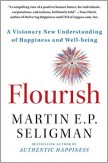 Flourish: A Visionary New Understanding of Happiness and Well-being by Martin E. P. Seligman. “Seligman, a psychology professor at the University of Pennsylvania and the guru of the “positive psychology” movement, abandons his previous emphasis on happiness, which he now views as simplistic, to examine how individuals might achieve a richer, multilayered goal: a life of well-being. He identifies four factors that can help individuals thrive: positive emotion, engagement with what one is doing, a sense of accomplishment, and good relationships.”

 The Ballad of Bob Dylan: A Portrait by Daniel Epstein. “Historian and poet Epstein (The Lincolns) structures his loose-jointed chronicle around exegeses of iconic Dylan concerts he attended, analyzing the songs and the shifting persona of the singer: in 1963, the visionary 22-year-old folkie; in 1974, the bristling 30-something rocker; in 2009, the hoarse old man growling at Fate.”

 Barnhart Concise Dictionary of Etymology by Robert K. Barnhart. “…like exploring the historical, political, and rhetorical wonderland of our linguistic heritage. We see the evolution of ideas, as rootword connections that now seem arbitrary are traced to schools of thought from the past. We also find an opportunity to examine how the sometimes backwards, sometimes hilarious, and sometimes illuminating ideologies built into our language affect our modern thinking.”
________________________________________
Optimistic to be sure, but a number of these are being reread, or are just to-be-skimmed and the cookbooks and dictionary don’t count…
What’s on your summer reading list?
Have you read any on mine?
________________________________________
 Register for the campout here.