Blog

  • I Think I Might Need to Cheat a Little Bit

    I Think I Might Need to Cheat a Little Bit

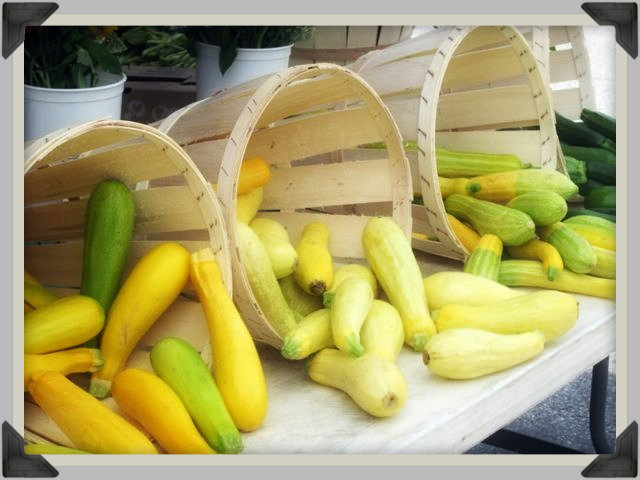
    farmers market squash and zucchini

    Listen
    Do you want to know a secret
    Do you promise not to tell?
    Oh-a-whoa, oh
    closer

    For one reason or another I’ve had to miss the last two Sundays at my farmers market. Cassidy and I were both genuinely worried we’d bypassed the sugar plum crop entirely, but I wrote about the glory of sugar plums last year on July 12th, so I think we’re safe.

    I’m feeling a little bit out of sorts about the whole thing. I don’t like my routines disrupted, for starters, but I think I haven’t been eating as much produce as a direct result— the grocery store feels subpar and overpriced by comparison— and I feel a physical difference. I feel heavy.

    After a holiday weekend we have pretty much no food in our pantry or refrigerator, and I don’t wanna go to the supermarket.

    I want fresh tomatoes and sweet corn and blackberries and local eggs and cheese and bacon. (Now I kinda want an omelet.)

    I want to talk to the farmers about what to do with garlic scapes and laugh about how the kids have grown.

    I hate grocery shopping and I enjoy market shopping. I don’t think it’s too much to ask, to enjoy my thankless chores for at least a few months of the year.

    So…. I think I’m going to visit a new (to me)  farmers market this week. Or maybe two.

    I feel vaguely like I’m cheating on my regular market. A wanton foodie hussy. Don’t worry, darlings. I have enough love to go around…
  • In Defense of Childhood: A Prescription for Play

    In Defense of Childhood: A Prescription for Play

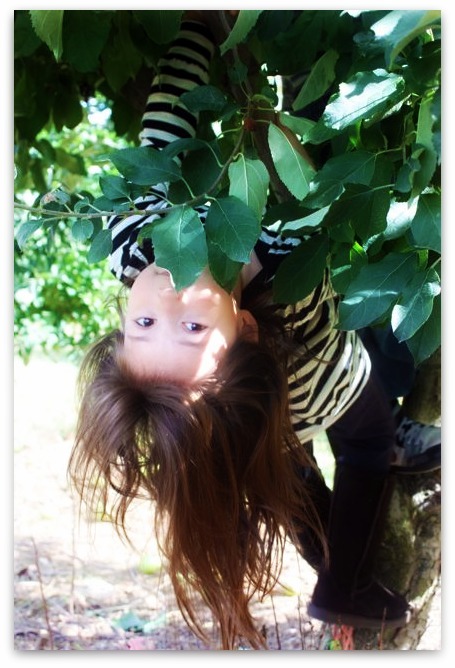
    climbing trees

    The opposite of play is not work.
    It’s depression.

    Brian Sutton-Smith, The Ambiguity of Play

    It’s on the long side, but you should totally check out this video, created by the Alliance for Childhood and KaBOOM!.

    It features Dr. Ken Ginsburg, local pediatrician at the Children’s Hospital of Philadelphia & author of Building Resilience in Children and Teens: Giving Kids Roots and Wings, and Dr. Marilyn Benoit, former president of the American Academy of Child and Adolescent Psychiatry and Chief Clinical Officer at Devereux Behavioral Health.
    The doctors speak to the consequences of less play in children’s lives (in 1997, kids aged 3-12 spent 16% less time playing than kids did in 1981):

    • social isolation
    • narrow concept of success
    • afraid to think outside the box
    • fear of failure
    • stress, anxiety, and depression.

    They also champion the benefits of play and really do a good job explaining how play is crucial for raising children who are resilient, creative, and kind.

    My favorite bit is the discussion surrounding the need to redefine what success means:

    “Success is being happy. Being kind. Being compassionate. Being generous. Being creative. And being innovative.”

    What’s the best way to raise children for this sort of success?

    Good questions. Good stuff. Watch it. Live it. Your kids will thank you.


  • Honeysuckle Honey

    Honeysuckle Honey

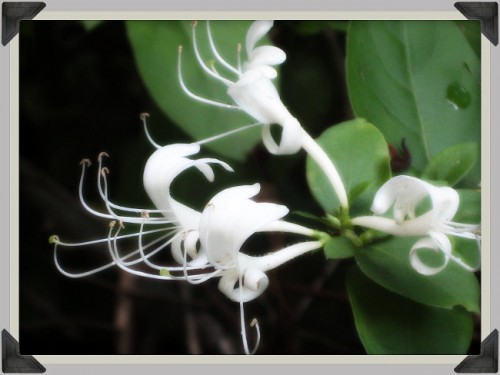
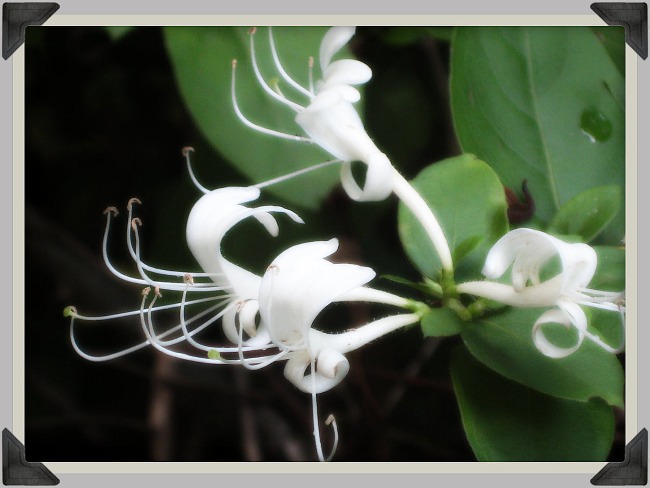
    white honeysuckle

    I plucked a honeysuckle where
    The hedge on high is quick with thorn,
    And climbing for the prize, was torn,
    And fouled my feet in quag-water;
    And by the thorns and by the wind
    The blossom that I took was thinn’d,
    And yet I found it sweet and fair.
    Thence to a richer growth I came,
    Where, nursed in mellow intercourse,
    The honeysuckles sprang by scores,
    Not harried like my single stem,
    All virgin lamps of scent and dew.
    So from my hand that first I threw,
    Yet plucked not any more of them.

    -D. G. Rossetti, “The Honeysuckle”

    Summer is largely about scent to me: the scent of the bay as we arrive at the beach reminds me of crabbing with my parents and brother. The smell of carnival foods. The salt of the ocean.

    One of my favorite scents of summer— deep, humid summer— is that of honeysuckle, concentrated in the humid air. It’s become something of a standing joke between me and the kids, that I can’t drive past a particularly dense patch of honeysuckle without rolling down the windows and breathing deeply. “Smell that honeysuckle,” I feel compelled to say, just as my father did, and sometimes my kids singsong it in unison.

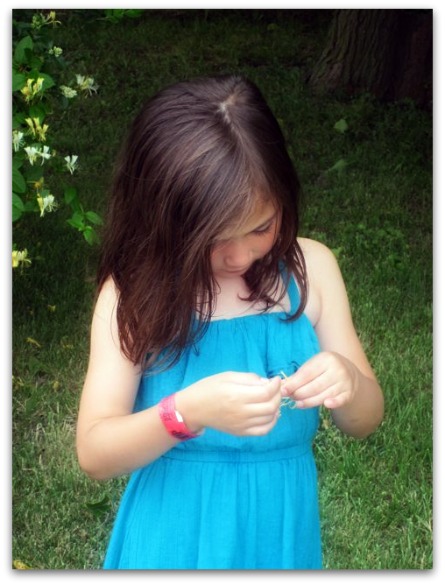
    We also love picking the honeysuckle flowers and breaking them open for the one tiny little pearl of honey to be had inside. It’s a little silly and doesn’t taste like a whole lot (the kids claim otherwise but that’s my story and I’m sticking to it), but still it’s hugely satisfying.

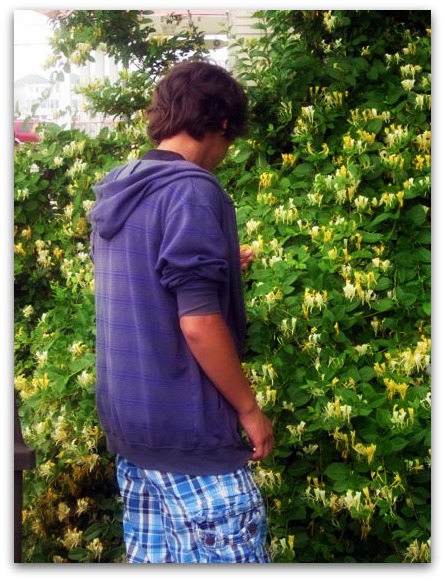
    Especially when you come across a huge bush that’s easily accessible.

    honeysuckle bush

    Just in case there are people who have never done this:

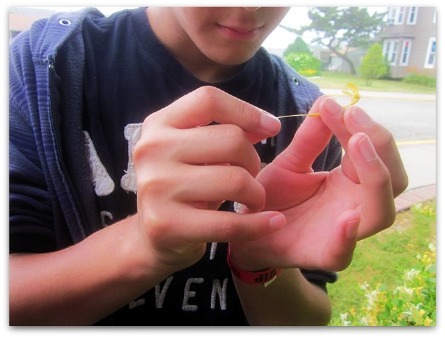
    You pluck the flower and carefully break off the bottom of the trumpet.

    making honeysuckle honey

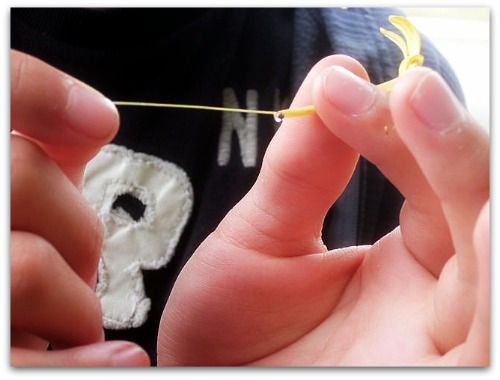
    There will be a little thread sticking out, the pistil. Pull that through slowly.

    pulling the pistil through

    The pollen produced by the stamen will “hook” on the female parts and turn into nectar (or “honeysuckle honey”).

    making honey from honeysuckle

    Now, if you were so inclined to grow honeysuckle and savor the scent all summer long in your own backyard: you should know that there is native honeysuckle (lonicera americana) and invasive honeysuckle (lonicera japonica). Both will take over your yard in no time without vigilant pruning, but native is preferable simply because it has evolved along with your backyard wildlife and is better suited to their needs.

    There are over a hundred different types of honeysuckle, but speaking generally natives are colored in shades of red, orange and coral (hummingbirds will LOVE), while the invasives are those white bushes that you tend to see creeping alongside highways and whatnot.

    And now, you.
    What are your favorite scents of summer?