Blog

  • KaBOOM! Park-A-Day Summer Challenge

    KaBOOM! Park-A-Day Summer Challenge

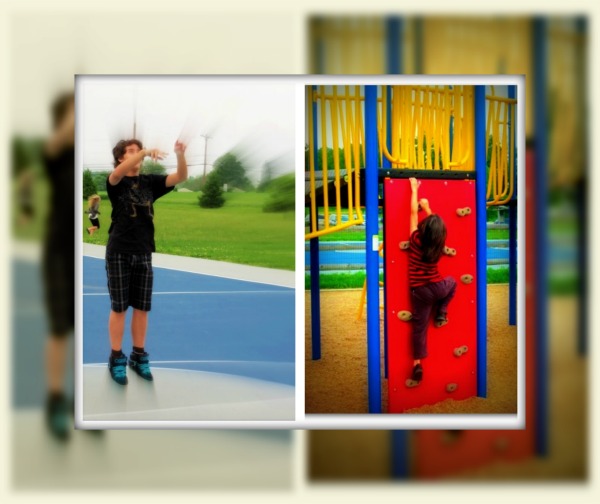
    playground

    You are worried about seeing him spend his early years in doing nothing.

    What! Is it nothing to be happy?

    Nothing to skip, play, and run around all day long?
    Never in his life will he be so busy again.

    -Jean-Jacques Rousseau, Emile


    Kids who engage in physical play are healthier and less likely to be overweight.

    Kids who engage in physical play are smarter and better able to focus, particularly in math.

    Kids who engage in physical play are happier, less stressed, more social, and better able to negotiate.

    Want to help advocate for play?

    KaBOOM! is looking for parents committed to getting their kids outside and playing this summer to participate in the Park-A-Day Summer Challenge.

    As part of the challenge, you will be asked to:

    • Take your children to as many local parks, playgrounds, or other public playspaces this summer as you can. (No, you do not need to visit a park every day. But if it works for your schedule, you can try!)
    • Add and/or review each playspace on the KaBOOM! Map of Play.
    • Swap stories and advice with other Summer Challengers in the Park-A-Day Summer Challenge Discussion Group.

    By participating, not only does your family reap the (plentiful, varied, and important) benefits of outdoor active time, but you help spread the word about the power of play. By adding playgrounds and playspaces to the database, you help other parents find hidden gems in their community or while traveling. And by rating the amenities and condition of each space, you help highlight where attention is needed to keep playspaces safe and fun.

    Today is the first official day of summer vacation for my family, and I can’t wait to GET OUT & PLAY!!

    Join us in signing up for the Park-A-Day Summer Challenge.
    C’mon, YOU KNOW YOU WANNA.

    ___________________________________________________


    kaboomKaBOOM! is a national non-profit dedicated to saving play for America’s children. Their mission is to create great playspaces through the participation and leadership of communities. Ultimately, they envision a place to play within walking distance of every child in America.

    To date, KaBOOM! has built over 1,900 playgrounds, saving play for over 3.5 million children.

    ___________________________________________________

  • No More Flavored Milk in L.A. Schools: We’re Picking the Wrong Battles

    No More Flavored Milk in L.A. Schools: We’re Picking the Wrong Battles

    fast food chocolate milk

    You never change things by fighting the existing reality.

    To change something,
    build a new model that makes the existing model obsolete.

    -R. Buckminster Fuller

    Look, I want to start off by saying I love Jamie Oliver and everything he’s trying to do, and every time I watch Food Revolution I wind up yelling at my TV screen in a futile attempt to shame the mean people who stubbornly stand in his way. Fight the power, Jamie. Right on right on.

    That being said: I’m seeing people celebrate the removal of chocolate and strawberry flavored milk in L.A. schools, a major campaign in this season’s Food Revolution, and the victory feels hollow at best.

    Yes, flavored milks contain more sugar, and yes, about 60% of the cartons of milk kids choose at lunchtime are flavored. But let’s be real.

    Give kids a choice between white milk, apple juice and orange juice, most kids are going to choose the juice. End of story.

    All you’ve done is swap one kind of sugar for another.

    ____________________________________________________


    But Robin,
    you may ask, why don’t kids just drink water instead?

    Why, that’s an excellent question. I’ll tell you why. Because schools are reimbursed by the federal government for the milk kids purchase; that’s true of orange juice too. But they receive no reimbursement for water, tap or bottled, because water provides no measurable nutritional value.

    I’m not blaming the schools, really. They have a very tight budget to work with and they are required to meet certain nutritional thresholds to receive their federal reimbursement, so every food is chosen based on their ability to be checked off a list of standards (which is why we get ketchup counting as a fruit/veggie).

    But seriously, come on. Kids need water.

    They need about 8 glasses a day— more for bigger kids, and during warmer months— and since they’re spending at least half their day at school, logically they should be getting at least half their water intake there.

    And yet, AND YET: how many water fountains are there in a typical school? One for every, what? 100 students? 200? More? All lined up for water? How much can they possibly take in?

    Ever drink from a water fountain? I won’t, and I’ll tell you why. They’re nasty. The water almost always tastes terrible. Metallic. It’s rarely cold. Half the time the water just barely dribbles off the faucet so you have to get your mouth right up in there. There’s no way to know what the quality of the tap water is like. And?

    Water fountains are petri dishes. You know it, I know it, I don’t really want to think about it so let’s move on.

    ______________________________________________________

    The CDC’s National Health and Nutrition Examination Survey estimates that only 15% of tweens consume enough water. Why is this worrisome?

    • Mild dehydration— defined as 1%-2% water loss; by way of comparison a supremely hardworking athlete can lose up to 30%— can negatively impact a kid’s mood, energy levels, concentration and ability to learn.
    • Mental performance (memory, attention and concentration) is reduced by about 10%, once a kid is dehydrated enough to notice they are thirsty. Performance levels worsen as the level of dehydration increases. Water is an essential element in neurological transmissions; the brain is mostly water, after all (about 80%).
    • Long-term, chronic dehydration can lead to constipation, continence problems, kidney and urinary tract infections, kidney stones, and potentially some cancers (some studies suggest drops in cancer risk were specifically associated with water, rather than other fluids). Nighttime bed-wetting could also be caused by daytime dehydration affecting bladder capacity. [source]
    • A Journal of Pediatrics study showed that giving kids more access to water— water fountains in schools and refillable water bottles— along with educating kids on the benefits of drinking water decreased the risk of being overweight by 31%.

    ___________________________________________________________

    We need to get more water, quality water into our kids, all day long. Measurable amounts, not just rushed sips from questionable fountains.

    Then we can tackle the even larger problems of the lunchtime menu: the over-processing, the sodium, the lack of fresh ingredients, the indoctrination of a fast-food mentality.

    For some kids it’s the best meal they get all day. And yet prisoners receive more balanced, nutritious fare.

    We’re celebrating taking flavored milk off the menu, but offering water is not an option. There is something fundamentally flawed about this thinking. The fundamental thinking has to change. The budget allocations have to change. The cutting corners to save a few pennies at the cost of our children’s health has to change. The factory model just isn’t working anymore, and no small swaps are going to mean enough to make a difference.

    ________________________________________________________

    Jamie Oliver is trying his best to make a difference: to get kids nutritious meals 180 days of the year. Fresh meals made from real foods that will indoctrinate actual healthy habits. A meal that is as enjoyable as it is healthy, and cultivate a healthy relationship with food. Jamie is trying to bring about a Food Revolution for our kids.

    LAUSD agreed to take flavored milk off the menu. They refused to let him revolutionize the school kitchens— hell, even to see them— and then they gave him a little parting pat on the head.

    It’s a step, sure. But I’m just not up to the task of cheering for the consolation prize.


    We must not be afraid to dream.

    Do not be caught up by the evil dogs
    that carry the names of ‘efficiency’ and ‘convenience’.

    Instead, we must be ‘unrealistic dreamers’
    who charge forward taking bold steps.”

    -Haruki Murakami
  • The Great American Backyard Campout 2011

    The Great American Backyard Campout 2011

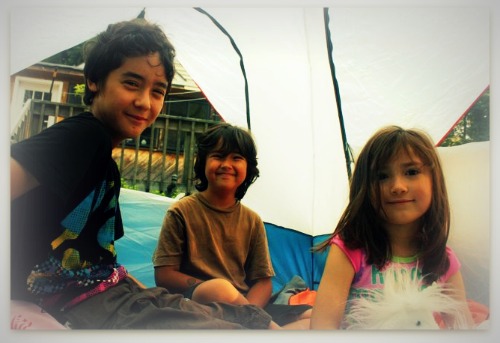
    kids in tent

    Now I see the secret of the making of the best persons.

    It is to grow in the open air, and to eat and sleep with the earth.

    -Walt Whitman

    It’s that time of year again! The Great American Backyard Campout takes place on Saturday, June 25th.

    “On June 25 thousands of people across the nation will gather in backyards, neighborhoods, communities and parks to take part in a one-night event that will provide a memorable experience for all generations to connect with nature. Great American Backyard Campout reminds us all of simple pleasures we had as a child and how these memories can inspire the next generation of children to appreciate the wonders of the outdoors.”

    As a kid I probably only camped half a dozen times, but those are some of my very favorite memories: the squirrels chattering, the birds chirping, the dampness of the early morning air, the fishing at the parks, the cooking over campfires and reading by flashlight, and most of all, the lying in sleeping bags after dark and talk, talk, talking to my dad.

    This summer I hope to camp at a bunch of different state parks, but first we’ll participate in the annual Great American Backyard Campout, part of the National Wildlife Federation’s “Be Out There” movement. (Longtime readers will remember that last year’s campout was particularly exciting, as I played referee between The Dogness and a baby raccoon.)

    The average kid spends seven hours exposed to electronic media each day.

    And just four to seven minutes engaged in outdoor unstructured play each day.

    That’s… just tragic.

    Research has shown that spending time in nature can combat child obesity, reduce stress, generate a sense of well-being, help you sleep, and reduce allergies. (Not to mention, it’s fun. Remember fun?) Way more detail about “nature prescriptions” and the benefits of unstructured outdoor play for kids’ health here.

    It’s also been established that kids spend less time in front of a screen when parents believe it’s safe to play outside. Makes sense, right? The Great American Backyard Campout is a wonderful opportunity to get to know your neighbors better. Ask around and enlist area families to join your camping team! Spend the night playing and sleeping outdoors… and maybe you’ll all be more comfortable with your kids playing together outside on a daily basis, with a collective eye keeping watch.

    Register for the campout here.

    There are a couple different ways to register:
    1.  Create your own team (camp with your family, invite friends and neighbors)
    2.  Register as an individual camper
    3.  Join an existing team near you. There are quite a few shared events taking place at parks and campsites across the country.

    While on the site make sure to check out the recipes, nocturnal wildlife guides, campfire songs & games, nature activities, etc that they have provided. The National Wildlife Federation really does a good job helping parents prepare for a night of fun and education in nature.

    Be part of something big… about 100,000 participants registered in 2010. Half were individuals & families who camped in their backyards or neighborhoods; 34% were youth groups and 16% were involved in organized campsites of 100 or more campers. I love collective efforts like this. We’re making a difference in kids’ lives, ya’ll.

    There is NO COST to register and participate, but campers can opt to fundraise to support the NWF and their efforts to get kids outdoors. I went ahead and set a goal of $50, but I’d love to raise more than that. Pretty pretty please consider donating on Team Elton’s behalf.

    HEADS UP FOR LOCAL PEEPS: If you’re in PA or thereabouts, and have never camped in a PA state park, you might want to look into their First-Time Camper Program. Twenty bucks will get you a camping spot for a weekend with rental of needed camping gear (tent, sleeping pads, cooking stove, etc) included. Park staff will also help you set up your tent (I need to learn to do this; Jeff has always done it for me). That’s pretty awesome.

    If a child is to keep his inborn sense of wonder,
    he needs the companionship of at least one adult who can share it,

    rediscovering with him the joy, excitement, and mystery of the world we live in.

    -Rachel Carson

    Are you a camping family? Any tips to offer for when I take the big plunge and camp somewhere other than my own backyard?

    ___________________________________________