I have a brother. He’s seven years younger than I am.
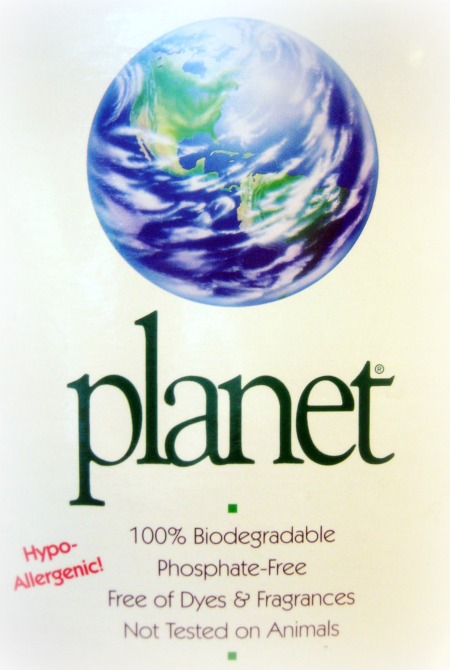
Recently he shelled out the extra cash to buy Planet Dishwasher detergent. It was, as far as I know, the first time that he had made a purchase with environmental concerns in mind. Planet is 100% biodegradable, and phosphate-free. Sounds good, right?
Well. Recently my brother gave me that very same box of Planet Dishwasher detergent, because, and I quote, “I need something that actually cleans dishes.”
I assumed he was being a pain and a perfectionist. One dishwasher run later, however, and I could see his point.
Film on the glasses. Thick film- doesn’t rinse off at all. Food residue on the plates. And you could immediately identify which cups had been used for chocolate milk, because they had a distinctive brown crust that had to be soaked in hot water and scrubbed off. By hand.
A week and some serious experimentation has gone by. Because I am both a pain and a perfectionist (runs in the family).
I’ve come up with a method that gets me dishes clean enough to live with:
- You have to use the high heat option on your dishwasher (this is the pots-n-pans function on my model). The box states that Planet works optimally at 140 degrees.
- Do not fill the entire detergent dispenser. I’ve always filled about halfway and found it sufficient; with Planet I had to cut back further. I now fill only about a third. Sure, this means it will last longer, but frankly I’ll be happy when it’s all gone.
- Hand dry the dishes. I usually let the dishes air-dry, but with Planet you have to dry them right away to avoid spotting.
In short, Planet for the dishwasher sucks.
This is a disappointment on many levels.
First off, I should not have to come up with elaborate constructs to use a product allegedly designed for my convenience, and I only offer the tips above for poor suckers like myself who don’t want to just throw a product away.
Secondly, I don’t like that I have to use such a high temperature for this cleanser to be effective. It feels like I’m trading one “green” ethic for another. I wouldn’t mind so much, I guess, if the end result was clean dishes, rather than mostly clean dishes.
Most importantly, my brother has been thoroughly put off by this whole situation. He made a tentative move into green territory- please keep in mind, spending more money to do so- and was rewarded with dirty dishes.
As a result, he now believes that environmentally friendly products do not work nearly so well as conventional (and this is totally true with this product), and he probably won’t try any others.
In addition, he’ll offer that opinion to anyone who asks.
There is no industry standard for natural cleansers. There should be. I think that if it’s labelling itself as a “natural cleaner”, it should
- a) be natural, and
- b) get things clean. At the very least, cleaner than they started.
Really, is that unreasonable?
I’ll slog through the rest of this package because I’m stubborn like that. But I definitely won’t buy any more of it.
Has anyone had success with an environmentally responsible dishwashing detergent? How about other Planet products?


