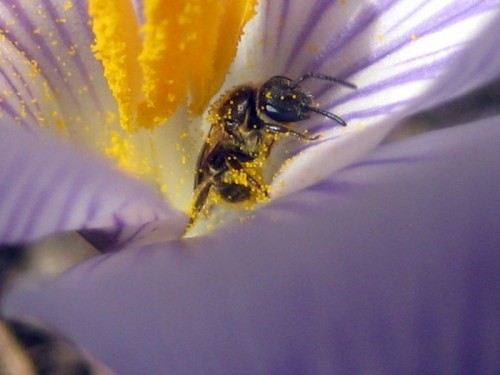
The keeping of bees is like the direction of sunbeams.
― Henry David Thoreau
Last Sunday in Oregon some 25,000 bees were found dead in a Target parking lot, an unsettling headline to read on the first day of National Pollinator Week. The jury is still out on the cause, but it looks like an improperly applied pesticide (not intended for trees while in bloom) might be to blame.
It’s being called one of the largest documented bumble bee deaths in the US, but bee die-offs have been happening with disturbing frequency over the last few years: annually we lose 30% of our bees. These die-offs are referred to as “colony collapse disorder,” and like this latest bee death episode the reasons are unclear. I’ve heard climate change is to blame, or over citification/under naturalization (I made those terms up but you know what I mean), or cell phone interference, or (most likely) the overuse of pesticides.
Bees and other pollinators are important, and it’s important that we sit up and take notice and care— and do what we can to help. To lose any prominent member in the food chain is inviting ecosystem chaos, but losing pollinators means severely impacting food security.
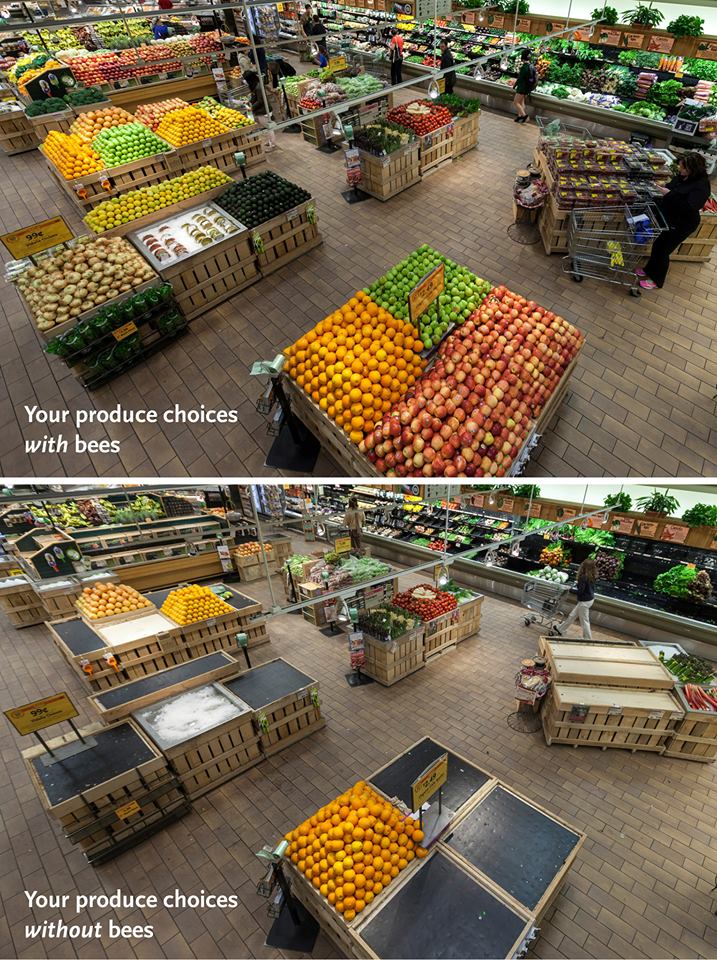
This Whole Foods photo represents what our homegrown food supply looks like without the aid of bees, who pollinate more than 100 of our crops.
So what can we do to help bees and pollinators?
- Don’t use pesticides. They impact bees and other pollinators, and I’m not convinced long-term exposure is great for every other kind of animal, either. Also, keep in mind that some insects may be considered pests in their larval stage but go on to become pollinators, or are important food sources for more loved birds and other wildlife.
- Buy organic. The more traction the organic movement achieves, the more it can expand and the more accessible it can become. Supply and demand, friends.
- Grow your own. Plant bee friendly flowers and encourage your neighbors to do the same. Think of it as a natural patchwork quilt or a bee railroad, offering sustenance through “food deserts” created by large expanses of asphalt and concrete.
- Go native. Stick with wildflowers that occur naturally in your region. They’re easier to grow, more hardy and have evolved to be more resistant to local pests (thus reducing the need for pest control). They’re also evolved to provide the best for your local bees.
- Buy local. Seek out local honey and support your local beekeepers.
- Educate yourself. This Citizen Scientist Pollinator Monitoring Guide is a pretty comprehensive source of bee info.
- Be citizen scientists. In the US, participate and add data to The Great Sunflower Project. In the UK they’ve streamlined the process with a smartphone app that makes it easy to contribute photos and data.
- Educate others. The fallout of bee decline affects us all, starting with higher produce prices and ending with something much worse. Spread the word. I like the Whole Foods Share the Buzz page as a place to start.
- Donate. The Xerces Society works with researchers and citizen monitors to collect bee data to help shed light on the problem, with legislators to preserve pollinator-friendly habitat, and with farmers and landowners to rebuild bee supporting landscapes.
- Sign your name. A class of pesticides called “neonics” has been listed as a possible cause of colony collapse disorder. European officials have enacted a 2 year ban on the use of these pesticides and this petition asks the U.S. Environmental Protection Agency (EPA) to do the same. Give it and others like it a sign. It only takes a second.