Category: Food & Recipes

  • On Staph and Grocery Store Meat, and the Price We Pay for “Fecal Soup”

    On Staph and Grocery Store Meat, and the Price We Pay for “Fecal Soup”

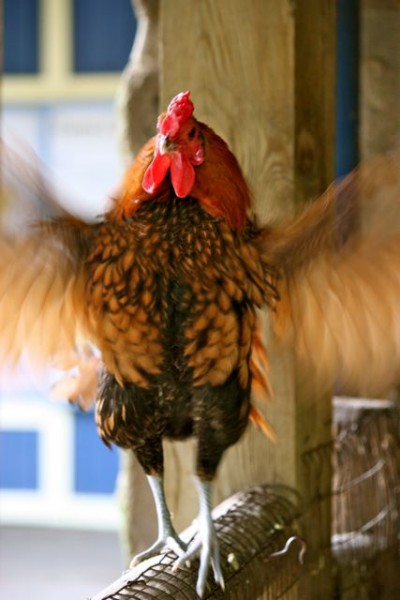
    flapping-hen
    Yes, I'm squawking again.


    There was an article on the USA Today site the other day, “breaking” the news that half of supermarket meat may have the staph bug (staph is bacteria that can cause a multitude of diseases and infections). Half of the contaminated meats held bugs resistant to at least three forms of antibiotics. They don’t spell it out, but the fear here is MRSA. Full disclosure, my uncle recently died of a MRSA infection, so I do believe MRSA is something worth fearing.

    This broad contamination of meat barely qualified as “news” to me. Meat producers know their meat is tainted, and that’s why it’s so emphasized that you need to cook your foods completely.

    I think most people know, on some deep dark guilty level, that factory farm conditions for animals are at best unethical and at worst criminally immoral. They are packed into stalls so tight they can’t move or lie down. They are forced to live in their own excrement. They are not properly treated for illness or any injuries they incur; instead, they are preemptively given antibiotics, which is how we get superbugs like MRSA. They are in a state of continual stress; they may never see daylight, or they may be under artificial lighting 24/7.

    Then they are corralled into slaughterhouses and treated in ways I can’t really talk about without wanting to vomit and go on some sort of vigilante rampage.

    We know all that, and we buy the meat anyway, which is a larger issue than I want to get into right now.

    Now for some stuff you might not know.

    Talking about our large livestock first: Big Ag has bought out or choked out of business nearly all small independent slaughterhouses, so even if you’re paying a premium for happy pigs and cows they are likely being killed using questionable practices, and cross-contaminated with whatever bugs came in with everybody else’s stock.

    Over 300 cows are hurled down the non-stop disassembly line every hour. The USDA inspector is the one man responsible for catching abnormalities and signs of disease in these carcasses as they slide by; he is also supposed to be checking whether the animal shows any signs of illness before being knocked unconscious (Mad Cow, anyone?). He is the only person legally regulating whether the kill is humane.

    At a rate of five per minute, my guess would be that he does none of these things well.

    Of course, we can’t know that. No cameras or guests are allowed on the slaughterhouse floor. And agribusiness is trying to push legislation that would punish people who take these jobs for the purpose of exposing cruelty and illegal practices.

    There is no transparency, no accountability.

    • 89% of US beef patties are estimated to contain traces of the deadly E. coli strain.
    • 70% of US pigs have pneumonia at time of slaughter.
    • Antibiotics administered to people in the US annually to treat diseases: 3 million pounds
    • Antibiotics administered to livestock in the US annually for purposes other than treating disease: 24.6 million pounds
    • Antibiotics allowed in cow’s milk: 80
    • Percentage of staphylococci infections resistant to penicillin in 1960: 13%
    • Percentage of staphylococci infections resistant to penicillin in 1988: 91%

    [source]

    Deep breath; now for the poultry.

    I live in chicken country— Delaware has more chicken than people. Are you ready for the chicken info? It’s sort of rough.

    To begin, the USDA Humane Methods of Slaughter Act does not apply to chicken slaughter. The National Chicken Council— not bleeding heart animal activists like me, mind, these are representatives of the industry— estimates about 180 million chickens are improperly slaughtered every year. Meaning they go into the scalding tank alive.

    Chickens grow up breast-heavy as they are bred for maximum sale advantage, so even those labeled free-range are probably unable to take advantage of whatever range they are given (free-range just means they have access to the outside, via an open door; it doesn’t guarantee anything more than that). The majority of factory-farm chickens can’t support their own weight on their feet.

    Most live out their sorry lives in a space approximately the length & width of a piece of paper, packed tens of thousands to a room. They are stressed, they are immobile, they have diseases and broken wings and bones, they can turn cannibalistic, and they are coated in feces.

    • Government records indicate that nearly all (95% +) of chickens are infected with E. coli and up to 75% sold in stores still carry the infection.
    • 90% of US chickens have leukosis (chicken cancer) at the time of slaughter.
    • 70-90% carry the potentially deadly Campylobacter bacteria.

    During the kill process, the chicken is dragged through a low-voltage electrified water bath, which is not quite enough to knock them out completely. (I would guess a lot of bowel-voiding happens at this time and shared with all the other chickens in the bath water.) They then go through a throat-slitter and a scalding tank, the tank’s heated water coaxing any caked-on filth from skin and feathers, and opening pores that facilitate cross-contamination through the skin.

    Contamination can also occur when the chickens are gutted, as intestines are commonly ripped open by the automated machinery. Birds contaminated in this way used to be declared unfit for consumption, but today feces-contaminated chickens are considered only “cosmetically blemished.”

    Aside: I wonder, of the half of supermarket meat that was found to be infected with staph, what percentage was poultry? My guess would be a stark majority.

    A USDA representative examines each chicken inside and out, but only for a few seconds per: he needs to check about 25,000 each day.

    Every week… millions of chickens leaking yellow pus, stained by green feces, contaminated by harmful bacteria, or marred by lung & heart infections, cancerous tumors, or skin conditions are shipped for sale to consumers.

    -journalist Scott Bronstein in the Atlanta Journal-Constitution

    The ride’s not over yet, folks. The chickens then move to a cooling tank where they get to chill in what’s been dubbed a “fecal soup,” one more overly-ripe opportunity for cross-contamination. Remember how the scalding tank opened up the pores? The birds now soak up the fouled water during the chilling process through those enlarged pores. Your chicken parts may be up to 11% of this absorbed liquid (it says so right on the packaging).

    Yes, you read that correctly. Not only is it perfectly legal to slaughter sick chickens that are caked in their own feces, but it’s allowable to then steep them in a fetid bath, the waters of which the meat soaks up like a sponge.

    We pay extra for that “special sauce.”

    And then we feed it to our children.

    —————————————————————————

    At this point I feel it’s relevant to mention that I am not a vegetarian, although I have been, here and there, throughout the years. I have trouble with anemia, and I question my own ability to keep my kids nutrient levels where they need to be without the iron and protein found in red meat.

    I don’t believe that asking people to become vegetarians is a viable solution to this problem. What we need to do is seek out farmers who produce their meat ethically and hygienically and without the use of non-therapeutic antibiotics, and transfer our budgeted meat dollars to them and away from factory farms. (I find these meats to average out to be more expensive by about a third, often the margin is even closer. The budget solution is to halve the amount of meat you generally eat; use the money you now have saved to fill out your meals with rice, vegetables, eggs. As a nation we eat too much meat anyway.)

    As small farmers find more business, they can band together to collectively support small slaughterhouses that kill as humanely as possible and can take the time to avoid cross-contamination.

    And maybe, when Big Ag sees that we’re putting our money where our mouth is, they’ll alter their own practices to better fit our demands as consumers. As parents, goddammit.

    ——————————————————————-

    I can already feel the rising swell of protests, and at the crest of each wave is the word MONEY. And my response to that right now is: money is what drives these practices. It is what drives the collective misery of factory animals with no voice, factory farmers with no rights, of those unlucky enough to live near a factory farm or slaughterhouse and bear the health consequences of that fate, and of all those who contract food-borne illnesses EVERY DAY. These corporations don’t care about you, your family, or your health. They care about YOUR MONEY.

    I am better than that. YOU are better than that.

    Look at it as a health decision or an ethical decision, it makes no difference to me. But we need to stop affirming that these practices are OK by handing over our hard-earned money to companies that knowingly put our children’s health at risk.

    It’s not OK.

    —————————————————————-

    **While I’ve read many different accounts of factory farming and slaughterhouses, I’m not an expert. My main source here was the one I most recently finished, Eating Animals by Jonathan Safran Foer, except where indicated otherwise. It’s a comprehensive look at what we eat, where it comes from, and why it matters; an at-times excruciating exposé but the horror is balanced by the author’s treatment of those who are doing it right. I highly recommend it, but I know that I’m preaching to the choir. Those whose lives would be most altered by the reading are those who would never read it… for precisely that reason.

    Life is frustrating, sometimes.**

    —————————————————————-

  • We Made It: Baked Sugar Doughnuts

    We Made It: Baked Sugar Doughnuts

    sugar doughnut

    “Dear Homer,

    IOU one emergency donut.

    Signed, Homer.”

    BASTARD! He’s always one step ahead.

    -Homer Simpson

    My kids like doughnuts. Me, not so much. I’ve really lost my taste for sweets.

    These doughnuts are baked, not fried; I hate frying things (I should say I hate when Jeff fries things, I don’t know I’ve ever actually done it myself) because we’re no good about holding onto the oil and it just seems so wasteful and messy.

    I skipped the “dip in butter” step at the end; just sprinkled some straight up supahfine sugar on and it was perfect for me.

    Baked Sugar Doughnuts

    1 egg
    1/4 cup superfine sugar
    1 cup whole milk, warm to touch
    1 tablespoon active dry yeast (note: if you buy envelopes of yeast, one packet is 2 1/4 teaspoons. So you will need to open two packets & measure this out)
    1 teaspoon salt
    2 teaspoons vanilla extract, plus whatever accidentally on purpose runs over the spoon
    2 1/2 to 3 1/2 cups all purpose flour, plus extra for kneading

    8 tablespoons (1 stick) cold butter, cut into cubes

    Sugar Topping

    4 tablespoons (1/2 stick) butter, melted in shallow bowl
    1 cup superfine sugar, mixed with cinnamon to taste ( I preferred to leave the cinnamon off entirely, next time I’m going to try a vanilla sugar experiment)

    –Get out your trusty stand mixer and fit with the paddle. Beat egg and sugar together on medium speed until combined. Add milk, yeast, salt and vanilla, beat until blended. Change speed to low, gradually add 2 cups of flour, and continue to beat until the dough pulls away from the sides of bowl.

    –Swap out the paddle for the dough hook. With mixer on medium speed (if you have a choice between 4 & 6, go with 6) add chunks of butter one piece at a time. Keep the mixer going until there’s no noticeable chunks of butter left (about 5 minutes). Reduce speed to low and add in additional flour until the dough comes together and “cleans” the sides of the bowl.

    –Turn the dough out onto a floured surface and knead. If you’re familiar with bread dough, this dough is much softer and doesn’t “firm up” in the same way; keep going until the dough isn’t sticking.

    –Transfer the dough to a lightly greased bowl and flip once to coat. Cover with plastic wrap or a damp towel and let rise in a warm spot until doubled, about 1 hour. (Top of fridge or dryer are always good candidates. Or, you could boil some water and then place the pot or kettle in the oven under the bowl. This is particularly good if you’re going the “damp tea towel” route since it keeps the dough from drying out.)

    –Punch down and roll out to 1/2 inch thick or so. Mine were thicker because I am not handy with a rolling pin. Don’t worry about being delicate with the dough; I found that the doughnuts I cut last (after being re-incorporated and re-rolled several times) were the best ones.

    –Cut into doughnut shapes with whatever you have handy: cookie cutter, mason jar, small bowl. (We used a big cup and a shotglass.) Place on a cookie sheet lined with parchment. Cover with plastic wrap and let rise in a warm spot until nearly doubled in size, about 20 minutes. Meanwhile, preheat your oven to 400 degrees.

    –Bake 5 to 8 minutes, until golden brown.

    –Let cool for a minute, then dip into butter (if you like) and then either plunge directly into the sugar mixture, or sprinkle the sugar on top, depending on your sweet tooth. Really try to resist the temptation to dip too early, it turns everything into a gooey mess (still delicious, but the texture is off).

    I can’t tell you if this reheats well. We had no survivors.

    I’m starting a new series where I make homemade versions of mass-produced treats.
    Ideas and success stories welcome.

    —————————————————————–

  • The Coupon Interview Experiment

    The Coupon Interview Experiment

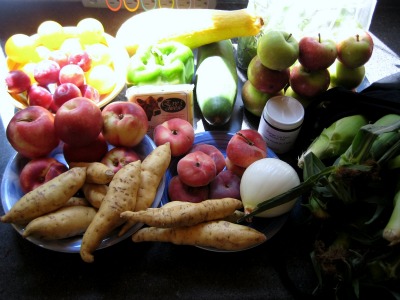
    farmers market haul

    A man is rich in proportion to

    the number of things he can afford to let alone.

    -Henry David Thoreau

    My In-Real-Life buddy Danielle Liss saw Extreme Couponing for the first time last week. (If you haven’t seen it, click on the link and watch some of the clips.) Danielle asked friends from all areas of the blog world to participate in an interview regarding groceries and coupons. I am incapable of refusing such a request, as Danielle owns many many many unflattering photographs of my teen years.

    If you want to participate, please feel free to copy the questions. Danielle plans to post a link to all of the answers, so send your link to dsliss [at] gmail [dot] com.

    1.  Do you use coupons for groceries?

    On occasion, but the majority of coupons are for items that just barely qualify as food, let alone good food. In our local paper you’ll periodically see coupons for Seventh Generation, Marcal recycled paper products, Sun & Earth detergents, yeast, Newman’s Own, and I’ll use those.

    2.  What is the primary source of your coupons?

    I get the Sunday edition of the Wilmington News Journal; I follow brands I’m loyal to on FB, Twitter and/or by email and sometimes coupons pop up that way. I also subscribe to Moms Need to Know via RSS and scan Mindi’s grocery store/coupon matchups (local to PA and includes Whole Foods) for anything that looks good; she links you up to the printable coupons. (Mindi, you need an organic category for people coming to the site for the first time.)

    3.  Have you ever purchased food that you would not normally eat because you have a coupon? Remember any examples?

    Have I ever? Suuuure. I went through a period of intense frugality when I wouldn’t buy anything without a coupon, and also bought things simply because they were such a good deal with the coupon.

    One would think I’d have been introduced to a lot of great new brands that way, but I honestly can’t think of a time when that happened even once. Today, I won’t even look twice at a coupon unless it’s something I plan to buy anyway.

    4.  When you grocery shop, what are the most important factors in your food choices?

    Is this real food? Is it packed with preservatives, HFCS, food coloring, sugar? Does it involve an unconscionable amount of packaging? Can I recycle the packaging? Is it organic?

    Is it going to make me feel bad about myself, on an ethical level for buying it, on a parenting level for feeding it to my kids, on a personal level if I eat it myself and it makes me feel ill?

    5.  Do you use reusable bags? Why or why not?

    I do, but not as often as I should (i.e. every time). I am really bad about forgetting them lately.

    I do recycle the plastic ones we use (cat litter can or return to store) and the paper ones (hold paper recycling). Plastic never goes away, it just breaks down into itty-bitty pieces, winding up contaminating our soil and water and working its way up the food chain.

    6.  If you had a coupon, would you purchase a stockpile of items because of the deal?

    No. I might buy two.

    Expiration dates sneak up on you more quickly than you expect, people eat more when there’s more to eat, we lose power on a regular basis out here in the boonies and things spoil. Stockpiling is a good way to waste food, in my opinion. And clutter in your house keeps the good energy from moving around, that’s bad feng shui. (I’m not sure if I’m kidding about that or not.)

    7.  Do you plan your meals in advance? What do you base your meal plan on?

    I loosely plot out seven dinners. Some weeks I get more organized and plan the meals so that the leftovers factor into later dinners. My family is really literal so if I commit the meal plan to paper or internet, I’m locked in.

    The meal plan reflects what’s in season at the farmer’s market, or what was on sale at the store that week. It has to fit our schedule (crockpot meals on nights when it’s my turn to take a kid to soccer practice, etc). Since I pay more for free-range and organic, it’s really important that everything gets eaten. I hate to waste food or money.

    8.  Have you ever tried to coupon to get items for free or close to nothing? How did it go? Do you still coupon?

    Band-aids (we go through a lot of bandages, we are hands-on-yet-clumsy folk) occasionally go on sale for a dollar a box, so with a doubled coupon you get it for free. Ditto for Pringles, or Kool-Aid (yuck) which Jeff likes in his lunches sometimes; I refuse to pay good money for that crap.

    9.  Last one – What do you blog about? (Or, as we learned in Bloggy Bootcamp, what’s your elevator pitch?)

    simple.green.organic.happy. is a series of musings on green living, playful parenting, and the pursuit of happiness. By treading lightly on the earth, raising upstanding human beings, and finding beauty, complexity & happiness in my own backyard, I’m trying to become a better person and leave the world a better place. I hope others may be inspired to join me.

    Thrift is not an affair of the pocket, but an affair of character.

    -S.W. Straus

    A few unsolicited observations:

    I don’t have cable, and I haven’t seen Extreme Couponing, but my inexpert opinion is that some people are desperately clinging to a illusion of security and control that is misleading and unhealthy.

    It’s one thing to feed your family on $50 a week if that is the very very most you could possibly afford (although even then you’d be better served with some packets of seeds and some careful meal plans; I talked about this in SPAM is not the answer). It’s quite another to spend so little because with enough time and coupons, you can. It’s immensely freeing to give money away, and my experience has been that when you release money “into the wild,” when you let go of some of its power over you: that’s when the universe becomes more generous. I hate to get all New Age-y but I cannot deny the karma.

    Also, what extreme couponers are not taking into account is the long-term costs of that kind of diet. **slapping on my Food Police badge and bracing for impact** I am totally behind Jamie Oliver when he says sending a Lunchables into school with your child is a form of child abuse, even if you got it for free. Kids are only capable of eating what we provide for them, and if what we provide is processed, sugar-laden, pesticide-covered, BPA-laced (and contributes to the well-being of factory farms, which comes with its own host of health problems), then we are setting our kids up for a lifetime of improper eating habits. Which we KNOW is not healthy for them. If we KNOWINGLY lay the building blocks for an unhealthy future, that is, at the very least, neglect.

    Food is central to our health and well-being and should not be something we pride ourselves in finding bottom-basement prices for. If ever there was a place for quality over quantity: this is it.

    Lastly, I can’t get over the business model of printing millions of coupon booklets, which only a small percentage of people actually clip, and I would guess most of those clipped coupons expire before they are redeemed. Why can’t we put a better e-couponing system into place?

    If you have opinions about coupons please play along, ’cause Danielle is my friend & I like her.

    ——————————————————————————-