Category: Green Home & Garden

  • Why We Need Modern Day Victory Gardens

    Why We Need Modern Day Victory Gardens

    I am of the opinion that my life belongs to the whole community
    and as long as I live,
    it is my privilege to do for it whatever I can.

    I want to be thoroughly used up when I die,
    for the harder I work the more I live.

    -George Bernard Shaw

    The boys and men of Europe marched to war in the summer of 1914. As a by-product of the fighting, fields of crops were crossed, slashed, burned, rendered useless. This set into motion a food production imbalance that proved catastrophic in 1916, as crops failed everywhere. Rations were set into place; all of Europe submitted to meatless days and dairy could only be had with a physician’s explicit prescription. Italians were allowed only nine pounds of sugar a year, and that only if sugar was to be had.

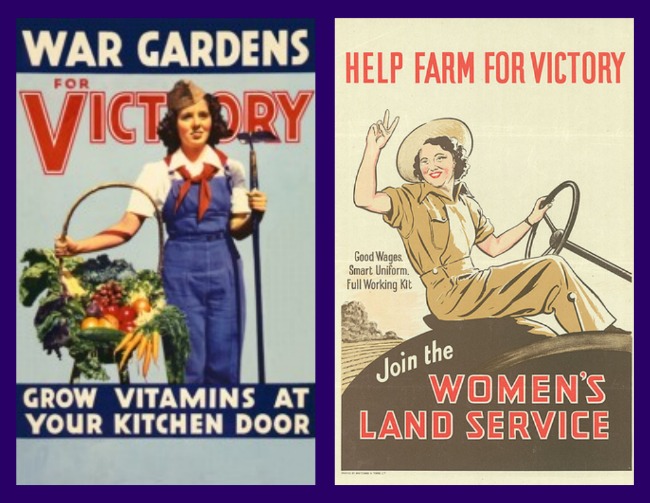
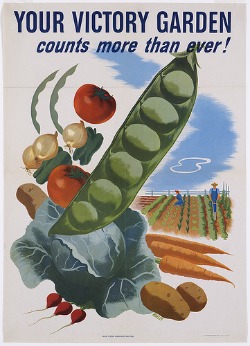
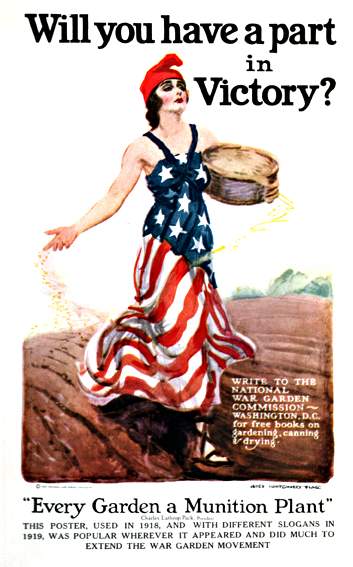
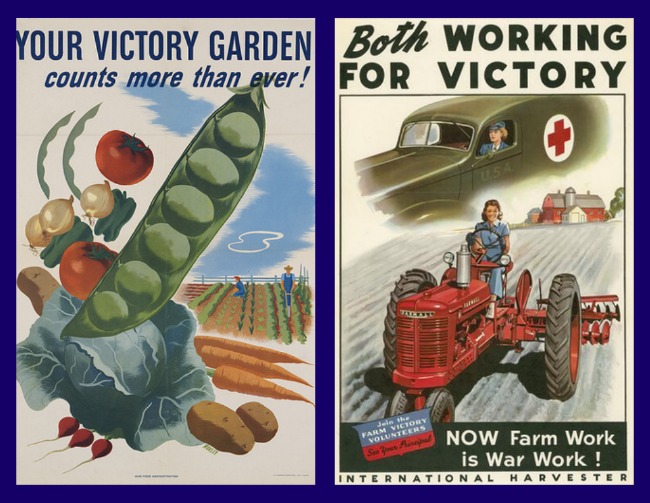
    It was up to us here in the United States to feed the world’s starving and we rose to the challenge. In 1917 Charles Lathrop Pack organized the National War Garden Commission and brilliantly marketed the war garden campaign: selling the victory garden as an act of patriotism, of freedom, of independence and the American Way.

    To waste food was to fail our troops and aid the enemy, it was as simple as that.


    “…every one who creates or cultivates a garden helps and helps greatly, to solve the problem of the feeding of the nations – and that every housewife who practices strict economy puts herself in the ranks of those who serve the nation.  This is the time for America to correct her unpardonable fault of wastefulness and extravagance.

    Let every man and every woman assume the duty of careful, provident use and expenditure as a public duty, as a dictate of patriotism which no one can now expect ever to be excused or forgiven for ignoring.”

    -Woodrow Wilson, in a proclamation to the American people,
    nine days after U.S. declaration of war


    When all was said and done, according to U.S. Department of Agriculture estimates, the Greatest Generation planted more than 20 million victory gardens: producing up to 40% of the vegetable produce consumed nationally in their own backyards, conserving food and funds that could be diverted to our troops in the pursuit of victory.

    Victory gardens have enjoyed a slight renaissance these past few years; First Lady Michelle Obama has emulated Eleanor Roosevelt in instituting a victory garden on White House grounds. Urban homesteaders and locavores cultivate gardens to free themselves from Big Ag and oil dependence.

    It’s not enough.

    Nationally gas prices are up 38% over last year. The average driver will wind up spending $1000 more on gasoline, forcing many to shift money from their grocery budget.

    The uptick in gasoline prices hits us again in the form of increased food prices.

    Globally, we waste over a billion tons of food a year, or a third of all food produced; $54 billion worth of food is thrown away annually in this country. 98% of that ends up in landfills, not compost piles, wasting more gasoline in transport and contributing to global warming.

    Yet 68% of Americans are overweight or obese.

    Meanwhile, in 2009 (and presumably more since then), 50.2 million Americans lived in food insecure households; about a third of those are children. 14% of Americans are on food stamps, an increase of more than 58% over 2007.

    Nearly half of those considered food insecure don’t actually receive food stamps or other government nutrition-assistance programs.

    And healthcare costs per family have more than doubled over the past decade.

    Do we really need to suffer a war-induced food crisis before we are compelled to step up?

    As a generation that, for the most part, has lost its sense of civic duty, agricultural skills and connection to the earth and the seasons, would we be capable of answering that call if it were issued? Are we made of tougher stuff?

    We need to relearn those skills, to be able to live in a self-sufficient way, to be able to provide for our countrymen should the need arise.

    —————————————————————————————————————————————

    But I’m saying the need is already here, and many are fighting a great war at this moment. Just to feed their children decent food.

    • Try your hand at gardening this year. No need for great expectations; as Emerson said, “Do not be too timid and squeamish about your actions. All life is an experiment.” We learn by doing.
    • If you have gardened before, experiment with new crops; see just how much your victory garden can yield.
    • Don’t waste food.

    “Those who cultivated the soil could hardly do more than they were doing,” said Luther Burbank, a member of the National War Garden Commission, in speaking of the matter. “It was becoming evident that food, which before had been taken as a matter of course, was in reality the foundation of all life, all knowledge, all progress. What could be done? It became necessary to conserve carefully what already had been produced, and then produce more. Agriculture and horticulture had not generally been taught in the schools; the old hit-or-miss plan of farming was all too common’ the home garden was neglected and the school garden a novelty. To the call both to conservation and to increased production, the American people have responded nobly. How quickly they have changed their attitude, how splendidly they have made good by adapting themselves to the new conditions! When the war garden movement was started, the problem of food production was on the way to be solved.”

    Be honest with yourself.
    Are you part of the solution? Or the problem?

    ________________________________________________________________________

    Content & Photo Sources:

    Wikipedia: Victory Garden

    Small Homestead: History of the Victory Garden

    “Do Your Bit For America”, Woodrow Wilson proclamation 15 April 1917

    The War Garden Victorious: its war time need and its economic value in peace, by Charles Lathrop Pack. This is available in its entirety online and hugely fascinating. I would have simply titled this post READ THIS with a link, if I thought people would actually do it.
     

  • Gardening for Bees

    Gardening for Bees

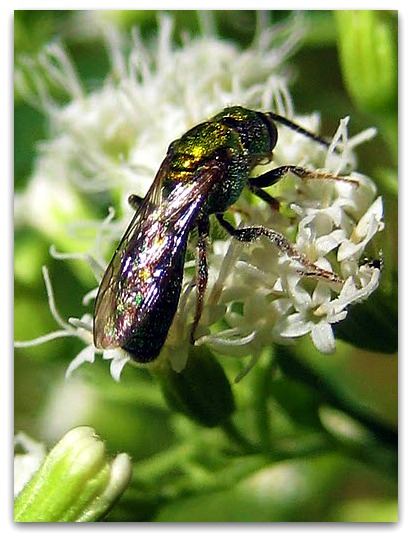
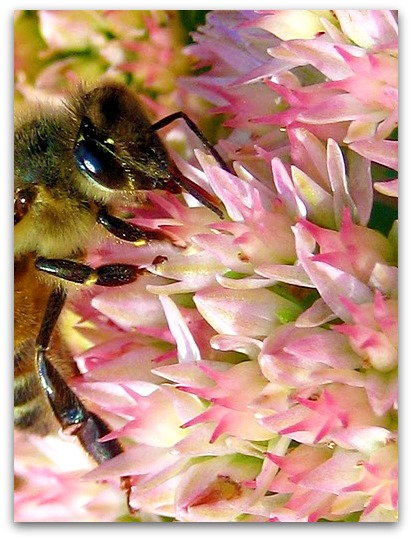
    bee on flower

    The busy bee has no time for sorrow.
    -William Blake

    According to the United Nations Environment Programme (UNEP), 100 crop species supply 90 percent of the world’s food, and bees pollinate more than 70 percent of those crops.

    As global population continues to grow, more pollinating bees are needed to feed more people.

    In 2006, beekeepers began reporting widespread losses of their honeybee hives: from 30-90%. Scientists are still not certain as to the cause of this bee die-off, dubbed Colony Collapse Disorder (CCD), but a report released last week by the UNEP indicates the scale is worldwide and ongoing. Until a cause and remedy for Colony Collapse Disorder is found, we need to actively work to preserve and bolster our bee populations.


    Fight Bee Decline with a Bee Garden


    Plant native flowers.

    Natives help feed your native bees; they have uniquely co-adapted over long periods of time to fit their needs. Supporting native bees acts as a “bee insurance” in the event we don’t solve the mystery of Colony Collapse Disorder soon. (If you’re in the DE/ PA/ NJ region, this is an excellent guide to our native plants.)

    Skip double flowers & hybrids.

    Doubles make it harder for bees to access the pollen; hybrids generally don’t produce much pollen for collecting. Basically, stay away from those really fancy, showy flowers.

    Allow for nesting and burrowing.

    This means leaving part of your yard uncultivated or “untidy.” If you’re not into that, maybe consider this super-pretty Bee Station.


    Don’t use chemical pesticides or fertilizers.

    Those aren’t good for bees, butterflies, ladybugs, or the birds & small mammals that depend on bugs for food. They’re also not great for small kids or pets, or tracking onto your carpets. Just don’t.

    Buy local honey.

    Help support local beekeepers in their bee conservation efforts. LocalHarvest has a list of honey suppliers searchable by zip code in their online store, or check your local co-op or farmer’s market. We buy from a very nice man who lives less than a mile away, and our co-op has Pine Barren wildflower honey which I just think is cool. (Possible bonus: some people say that eating local honey will help fight seasonal pollen allergies. Worth a try?)

    Make it count.

    Take part in the Great Bee Count on July 16th and help researchers determine exactly how our bee populations stand. (Plant sunflowers now so that they’ll be in full bloom at the time of the count!)

    Bee the change.

    • Ask if you can plant some bee-friendly flowers alongside local roads or on public lands to help create a network of “bee roads.”
    • When your plants go to seed in the fall, collect some and scatter them in vacant lots.
    • Seed bomb (keep it legal and NATIVE, do NOT seed bomb with non-native species).
    • Educate. Teach your kids not to be afraid of bees. Encourage your friends and neighbors to garden for bees.

    green-bee

    May is Garden for Wildlife Month! To learn more about gardening for wildlife and turning your yard into a wildlife habitat, check out this post and enter to win a copy of the National Wildlife Federation’s Attracting Birds, Butterflies & Other Backyard Wildlife.

    —————————————————————————————————————————-

  • Gardening for Wildlife (with giveaway!)

    Gardening for Wildlife (with giveaway!)

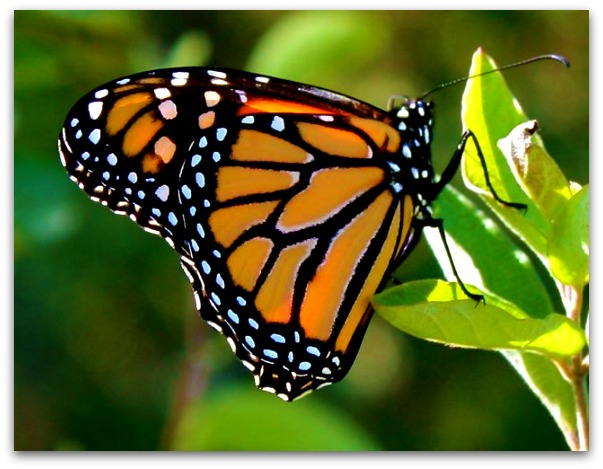
    butterfly

    The universe is full of magical things,
    patiently waiting for our wits to grow sharper.
    – Eden Phillpotts


    NOTE: I’m giving away a copy of the National Wildlife Federation’s Attracting Birds, Butterflies & Other Backyard Wildlife. Details are at the end of this post.

    Last week I talked about 13 great citizen science projects that kids can participate in, to foster a love & knowledge of the life all around us (while aiding researchers). To make those projects even more enjoyable & meaningful for your family, you might want to consider cultivating your garden with wildlife in mind. The better suited your property is to your local wildlife, the more wildlife will visit (and stay); the more for your kids to report!

    May is Garden for Wildlife Month, so I’m going to try to stay focused long enough to have our yard registered as a Certified Wildlife Habitat with the National Wildlife Foundation. It’s one of those things I’ve always meant to do… like, for over a decade.

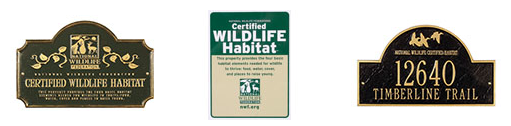
    When you certify in May, the NWF will plant a tree on your behalf; in addition, for a fee you can receive a sign to place in your yard signifying its habitat status. (Why does this matter? Because studies show that people are more likely to do good when they see others doing good. Your sign might inspire passers-by to garden for wildlife too!)

    certified habitat signs

    Think of your wildlife garden as a square in a patchwork quilt. Your neighbor’s yard, the next square over. Build the quilt in your mind to encompass your entire town, city, state.

    How many of those squares are taken up by hostile, barren environments like shopping malls, parking lots, interstates, power stations?
    How far does a hummingbird need to travel, from one nectar-providing oasis to the next? Is it any wonder that migratory animals encounter hardship? That many species of local wildlife are in decline?

    In so many ways making a difference for the planet is about fostering connections. Stand together or die alone, as the saying goes. How many people can you encourage and inspire to stitch a square onto your patchwork?


    Requirements to certify as a NWF wildlife habitat:


    Provide food for wildlife (need 3 elements):

    • seeds from a plant: remember to stick to native plants; your local wildlife has evolved to maximize nutrients from these plants. They are also more likely to do well in your climate (meaning less work for you).
    • berries & fruits
    • nectar & pollen
    • foliage/ twigs
    • nuts
    • sap
    • bird feeder/ suet feeder
    • squirrel feeder
    • hummingbird feeder
    • butterfly feeder

    We’ll have sunflowers up. We have a variety of nectar-bearing plants, a hummingbird feeder, a bird feeder, and a board mounted onto a downed log that we screw corn cobs onto for the squirrels and crows. We also have more foliage than you can shake a stick at, and wild raspberries and wineberries in late summer. (I don’t know if you can count those as a food source, though; the kids are pretty vigilant about picking the ripe ones themselves.)

    Provide water for wildlife (need one element):

    • birdbath
    • lake or stream; river; ocean
    • seasonal pool; spring
    • water garden/ pond
    • butterfly puddling area
    • rain garden

    We have a vernal (seasonal) pool— a more accurate description might be seasonal puddle & trickle— and a birdbath on our deck. We need to learn how to take better care of both so we’re not doing more harm than good.

    Provide shelter for wildlife (need 2 elements):

    • wooded area
    • bramble patch; dense shrubs or thicket
    • ground cover; meadow or prairie
    • rock pile or wall
    • evergreens
    • brush or log pile
    • water garden or pond
    • bird houses, bat boxes, bee shelters

    We’ve got this one covered: woods, brush piles, stick piles, evergreens, brambles (really just a forsythia that got overtaken by a stickerbush, but seemingly hundreds of birds hang out in there), the “pond”, bird houses. (I’m trying to convince Jeff to let part of the yard go to meadow but he seems to think that will invite the “wrong kind” of wildlife.)

    Provide a place for family time (need “at least 2 places for wildlife to engage in courtship behavior, mate, and then bear and raise their young”)

    • mature trees
    • meadow or prairie
    • nesting box (birdhouse)
    • host plants for caterpillars (good list here)
    • dead trees or snags
    • dense shrubs or thicket
    • water garden or pond
    • burrow

    We’ve got live trees and dead trees, shrubs, burrows, birdhouses, the pond if you want to count that (I’m not, since we’re going to be working on it and disturbing it). I think we have some milkweed that volunteers for the caterpillars, but I want to plant some more host plants just ’cause I like ’em.

    Garden in an Environmentally Friendly Way (need 2 elements):

    • Soil and Water Conservation
      capture rain water; xeriscape (water-wise landscaping with drought-tolerant plants); drip or soaker hose for irrigation; limit water use; reduce erosion (i.e. ground cover, terraces); mulch; rain garden
    • Controlling Exotic Species
      practice integrated pest management; remove invasive plants & animals; plant native plants; reduce lawn
    • Organic Practices
      eliminate chemical pesticides & fertilizers; compost

    Er. OK, Jeff bought organic soil and mulch (this is sort of a big deal, as I would never have said anything about it if he hadn’t. In fact, this tiny gesture meant more to me than I can ever say). He also has been yanking the never-ending garlic mustard. We have a compost pile and a worm farm, but fell off the composting wagon over the winter; I’ll try to get back on that. I’ll ask Jeff to make a rain barrel, since he’s always telling me that they’re too expensive and he can make one for nearly nothing. We conserve water, more out of a benign neglect than anything else 🙂


    And that’s it! We do qualify based on what we do already, but we’ll definitely try to do more. We’re mainly optimized for birds and squirrels (and deer, groan), but I’d like to see us being more hospitable to bees, butterflies, bats, frogs and toads.

    ———————————————————————————————-

    How are you gardening with wildlife in mind?

    ———————————————————————————————-


    GIVEAWAY! I have a copy of Attracting Birds, Butterflies & Other Backyard Wildlife (pictured above), by David Mizejewski, manager of the National Wildlife Federation’s Backyard Wildlife Habitat Program. This is my own personal copy, bought with my own monies. It is in used but Like New condition, with the exception of a little sticker gunk where the price sticker was on the cover.

    Leave me a comment telling me what bird, bug or animal you’d like to attract more of, for your chance to win!

    For a second entry, like my fan page on Facebook and leave a 2nd comment letting me know you did. (If you already like me 🙂 leave a comment to that effect.)

    **Must be a US mailing address. Winner will be chosen at random from all entries at noon on Sunday, May 15th.**

    Disclosure: I have no affiliation with the National Wildlife Federation and was not compensated or anything for this post. I just wanted to encourage everyone to garden for wildlife and thought, hey! Nice tie-in for a giveaway!