Blog

  • I am losing precious days.

    I am losing precious days.


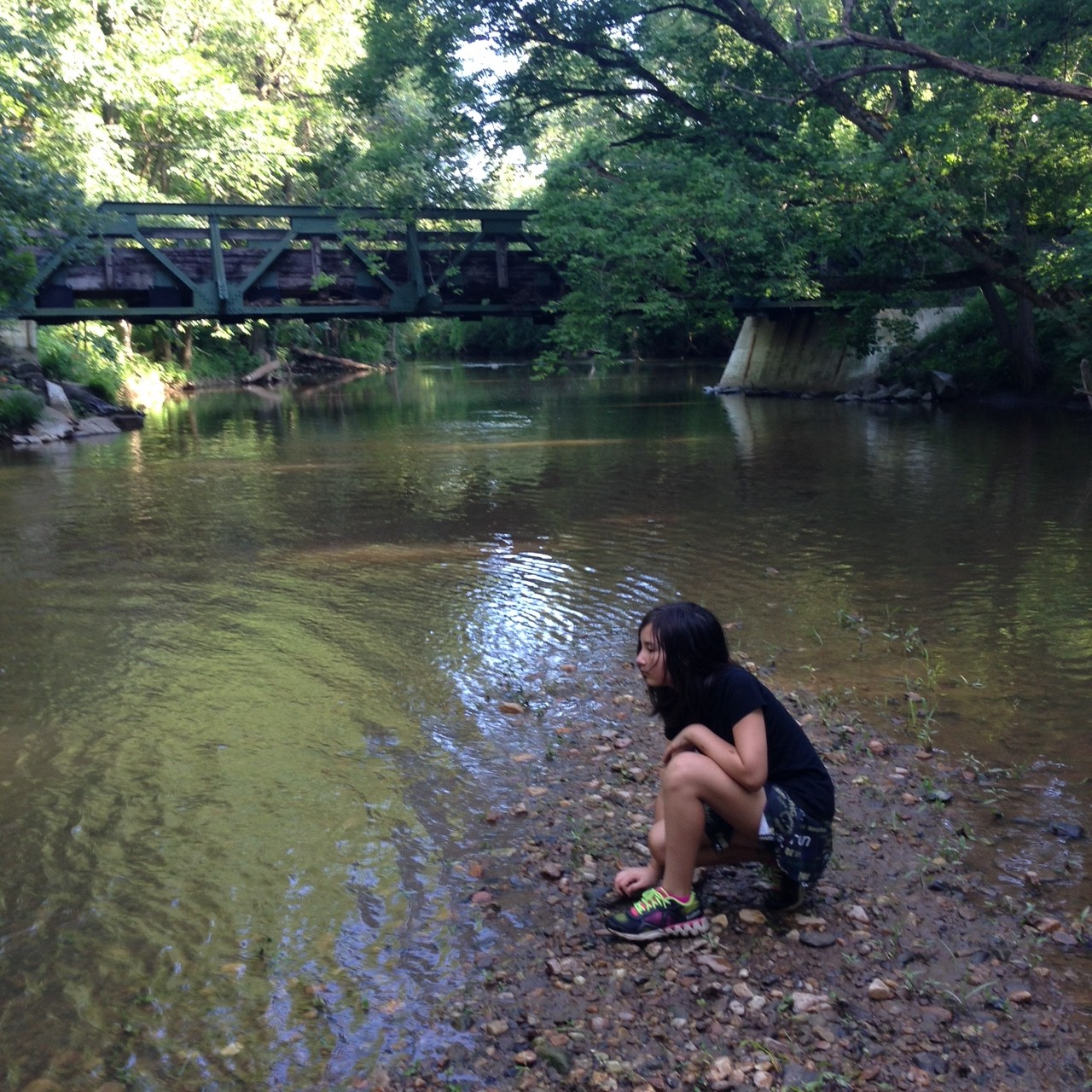
    creek

    I am losing precious days.
    I am degenerating into a machine for making money.
    I am learning nothing in this trivial world of men.
    I must break away and get out into the mountains to learn the news.

    -John Muir


    I’ve written before about nature prescriptions and the health benefits of getting outside in the sunshine, but not until recently have I felt like this was a pill I myself needed to swallow. I’m tired all the time, uninspired; my head feels fuzzy and clouded; I’m disconnected, dispassionate, wanting to write but not really and unable to find the words anyway.

    Hell, I did a crossword puzzle last night for the first time in forever and I struggled to think of words that I knew I knew. It was frustrating, and eye opening.

    I’m not stressed, exactly, and I’m not depressed— I’m in a limbo of overwhelm from a relentless (and generally relentlessly negative) news cycle, an endless stream of tasks on a to-do list that never gets any shorter, and a lack of white space to give my brain room to breathe.

    I lack edges. I lack sparkle, exuberance, enthusiasm. I am probably not much fun to be around.

    I just need to break away, to soak up the sun, to feel the ground beneath my feet. “The clearest way into the Universe is through a forest wilderness,” John Muir says; Thoreau reminds us that “Heaven is under our feet as well as over our heads.”

    Not till we are lost,
    in other words not till we have lost the world,
    do we begin to find ourselves,
    and realize where we are and the infinite extent of our relations.

    -Henry David Thoreau

    I’m not so far gone that I think I need to forge my own physical or even metaphorical cabin on Walden’s Pond, but I understand more fully now his reasons for doing so: to live deliberately, to not give myself over to resignation, to “live deep and suck out all the marrow of life, to live so sturdily and Spartan-like as to put to rout all that was not life.”

    I don’t have a nice, neat way to end this post, which sort of tears me up inside, but I suspect continually putting off hitting publish until I think of one means never hitting publish. So, here you go. I am having a hard time, but I am not resigned.


    Speak to me, internet:

    Have you ever felt this way? How did you break out of it?

     

  • Have You Seen This? Assassin Bug

    Have You Seen This? Assassin Bug

    assassin bug

    “Beware the Jabberwock, my son!
    The jaws that bite, the claws that catch!
    Beware the Jubjub bird, and shun
    The frumious Bandersnatch!”


    OK, this isn’t a Jabberwocky. It’s an assassin bug, and when I took this picture back in 2008 I’d never seen one before.

    Since then, I’ve seen them here and there, and this year I’ve seen several, even though I no longer spend my mornings wandering around the yard looking for interesting things to photograph (though now I think about it, I probably should).

    I don’t know that necessarily means there are more assassin bugs around than there used to be, but keep your eyes peeled, friends! You can find some sort of assassin bug pretty much anywhere in the United States and that beak he keeps tucked under his head bites.

    An assassin bug will violently stab prey to death— it’s pretty neat to watch actually— and juveniles and mature assassins alike will reward you with a nasty, painful bite if you manhandle him. So don’t.


  • How Do You Improve the Clothespin?

    How Do You Improve the Clothespin?

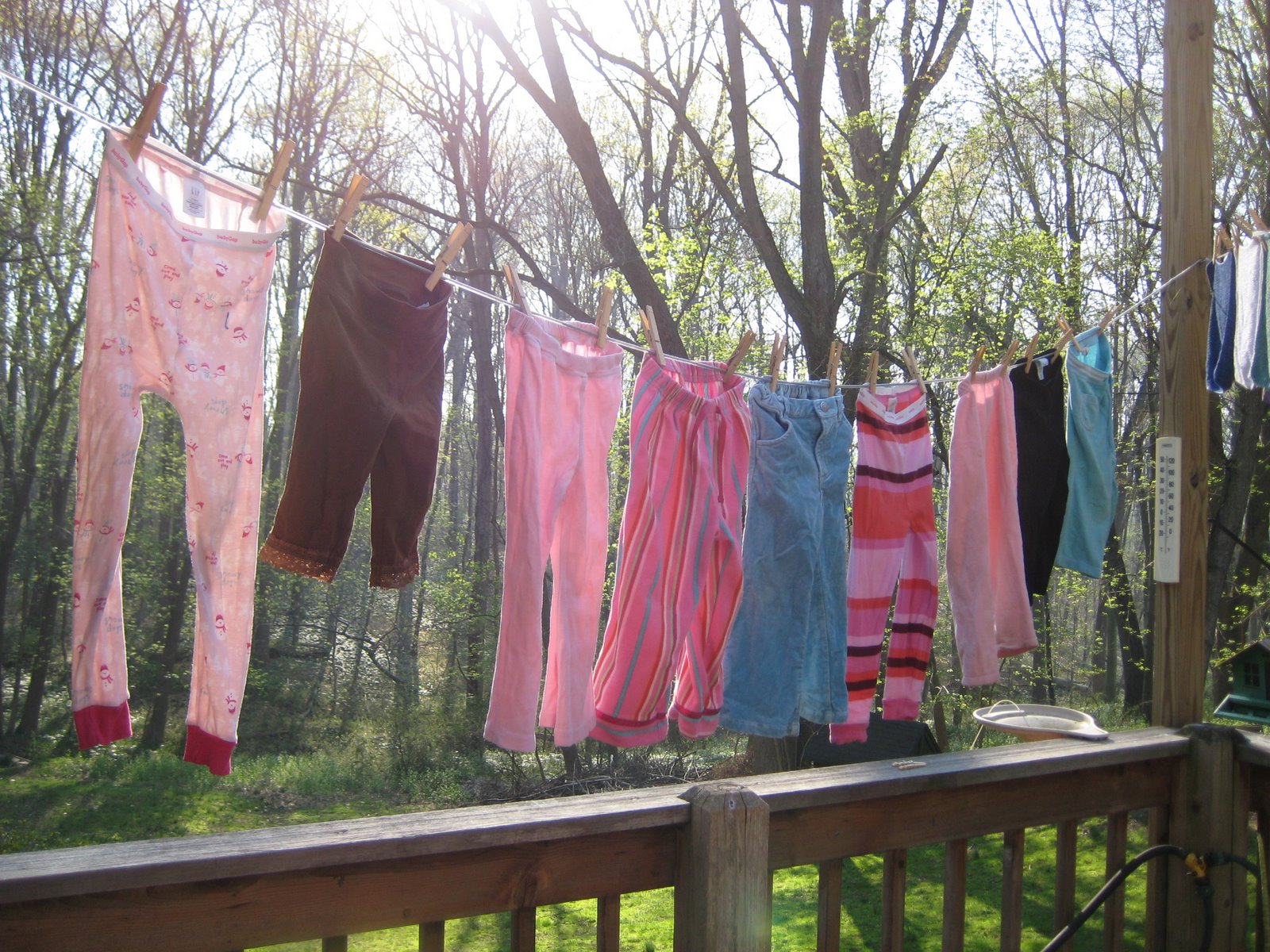
    clothesline_Cass
    If a man write a better book, preach a better sermon,
    or make a better mouse-trap than his neighbour,
    tho’ he build his house in the woods,

    the world will make a beaten path to his door.

    —Ralph Waldo Emerson


    I love when people look at things that have been good enough (yet not perfect) for forever, and figure out a way to think outside the box and improve on the design. I mean, a clothespin is a clothespin, right?

    WRONG. As a line dryer I know that if you sling something over the line you get a fold mark and it takes forever to dry. If you use clothespins on delicate fabrics you get pin marks. My solution is to use hangers for tops & dresses, but if I’m dealing with a heavy or delicate fabric I get the fold line issue again (only now it’s a hanger line).

    Scott Boocock came up with a simple solution, but that’s not the only awesome part of this story (reprinted with permission). Check it out:

    heg

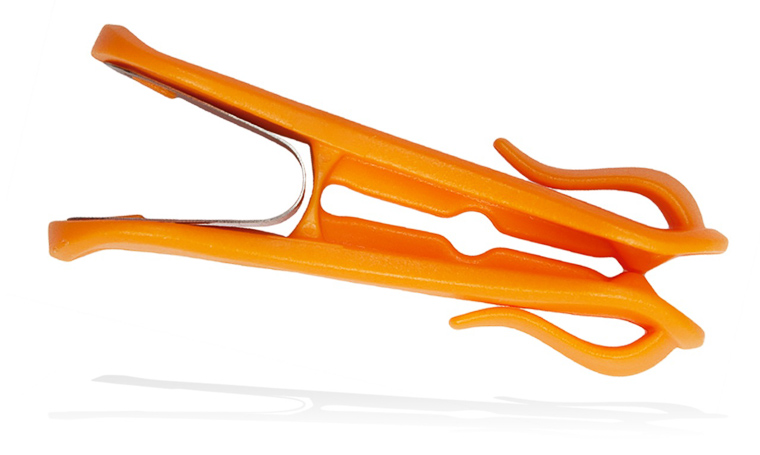
    A Qantas jet is flying 16,986 bags of Hegs clothespins directly from South Australia to Toronto tonight for distribution across Canada, the United States and Central America.

    “I wish I was getting frequent flyer points for it,” says Scott Boocock, creator of the Heg clothespin.

    It was a sixty-second idea, Boocock says. The innovation – putting a hook on each end of a clothespin – came about when he was trying to hang up his wife’s black dress on a sunny day.

    img - industries_manufacturing_150504_Hegs Pegs_banner-4

    “It had two straps on it. I thought, how am I gonna hang this up without any line marks, peg marks or sun marks. I worked out if I put a hook on it and market that worldwide, I’ve got it.”

    The Heg has been thrust in to the spotlight after winning a Good Design Award last year, being featured on Shark Tank and being named one of the top ten products at a recent Housewares Show in Chicago.

    “That’s why we’re shipping in to America now. It was a top ten product – that’s out of thousands of exhibitors with hundreds of products each. Our distributor in Chicago said they wanted them,” Boocock explains.

    “We said great. We’ll send them by ship, 45 days. They said no, we can’t wait. They asked us to make them and fly them over as soon as possible. That’s thousands of bags containing hundreds of thousands of Hegs.”

    North America is not the only country interested in Hegs.

    Boocock also has distribution deals with Aldi that cover the entirety of the United Kingdom, an Australia-wide distribution deal with Woolworths, a container heading to Africa, as well as distribution in place for the Middle East, Singapore, Phillipines, Thailand and Malaysia.

    “The power of ‘Australian-built’ or ‘Australian-made’ overseas is incredible.”

    The Heg was originally manufactured in China, but in the interests of quality control and helping local industry, the process now entirely takes place in South Australia.

    “When we started, we wanted to make it in Australia. No questions. After a while, it became apparent that I couldn’t for price reasons. But I kept thinking there had to be a way.”

    Boocock, who brands himself as the ‘Aussie Innovator’, spent twelve months working to return production to the country. By working on each individual element of the Heg rather than the final package, he managed to do it.

    “I talked to Technoplas about making the Heg, Multi Slide about making the spring, someone about making the bag, the box, the whole process. Before I knew it, I could do it cheaper here than in China.”

    There are many advantages to Australian production. Quicker shipping times and excellent quality control are the biggest, Boocock says.

    “We know what quality we’re getting here on a constant basis. They have ASO standards. With China, you just don’t know. You hope it’s the right product. But we can’t afford for that hinge to break. We can’t afford for there to be a bad quality on a batch of hooks and they break.

    “When you get a batch, we’re talking about a million Hegs. A million. You don’t get a second chance at that. The other benefit is we can walk down and show the kids that it’s actually manufactured here.”

    Hegs has also partnered with disability service provider Orana. Every Heg is assembled by their team of people.

    img - industries_manufacturing_150504_Hegs Pegs_banner-2

    “They’re great. It’s a great team there, a big part of our corporate social responsibility. They’re at different skill levels and that’s the best part. You can’t tell them to churn out one every second – it’s exciting to walk in there and see one person do it slower, another does it faster and another does it differently,” Boocock says.

    “They’re meticulous. At the end of the day there has to be quality control, whoever you use. And we’ve got it with them. I would suggest any manufacturer use them.”

    The Heg is patented in 44 countries worldwide. Hegs currently produces around 80,000 clothespins a day, more than 4,000 bags a day. The company is looking at producing up to 50 million Hegs in the next year.

    “It’s an amazing story. It’s worldwide. In two hundred years the peg hasn’t been innovated. It’s gone from wood to plastic but not anything else. People are talking about it. I don’t think there’s been any clothespin in history that people have talked about,” Boocock says.

    “It’s been a good journey.”


    Love this story? Tell me why in the comments.